 Listicle
7 Luxury RVs for Family Trips That Deliver Comfort and Value
Last Updated: October 26, 2026
Quick Summary
Luxury RVs for family trips offer comfort and flexibility by providing a mobile home where your entire household travels together with full kitchens, hot showers, and climate control. The right choice depends on your group size, trip length, and which amenities matter most, with options ranging from spacious Class A motorhomes that sleep six to eight people to compact Class C units ideal for families of four to six.
- Class A motorhomes sleep 6-8 people and offer hotel-style comfort but are lengthy and difficult to maneuver in tight spaces.
- Class C motorhomes measure between 24 and 32 feet, sleep 4-6 people, and provide the practical middle ground for first-time RV renters.
- Travel trailers and fifth wheels let you unhitch and use your regular vehicle to explore once parked at your destination.
- Budget for nightly rental rates of $250-$450 CAD for a Class C, plus fuel, campground fees of $30-$80+ per night, and insurance at $15-$35 daily.
- Sleeping capacity numbers are often misleading; verify actual bed dimensions and layouts before booking, especially lofts and bunks for teenagers.
Table of Contents
- What Makes a Luxury RV Right for Your Family
- Quick Comparison: Luxury RV Options at a Glance
- 1. Class A Motorhomes: Maximum Space and Hotel-Style Comfort
- 2. Class C Motorhomes: The Sweet Spot for Families
- 3. Travel Trailers and Fifth Wheels: Flexible Towing Options
- Best RV for Family Road Trips by Trip Length and Group Size
- Understanding RV Rental Sleeping Capacity and Layout
- RV Rental Costs and Fees: What to Budget Beyond the Nightly Rate
- RV Rental Delivery and Setup: Getting Your Home on Wheels Ready
- Book Your Family's Luxury RV Adventure
- Frequently Asked Questions
What Makes a Luxury RV Right for Your Family
Choosing the right luxury RV for family trips transforms how your household travels. Instead of splitting time between hotels and rental cars, you're living in a mobile home with everyone under one roof, cooking meals together, and waking up to new views each morning. But not every luxury RV suits every family.
The right choice depends on three factors: your group size, how long you're traveling, and what comfort features matter most. A Class A motorhome sleeps eight but feels cramped for two people. A compact Class B camper van is nimble on narrow roads but tight for a family of five. Travel trailers give you flexibility to unhitch and explore, but they require towing capacity your vehicle might not have.
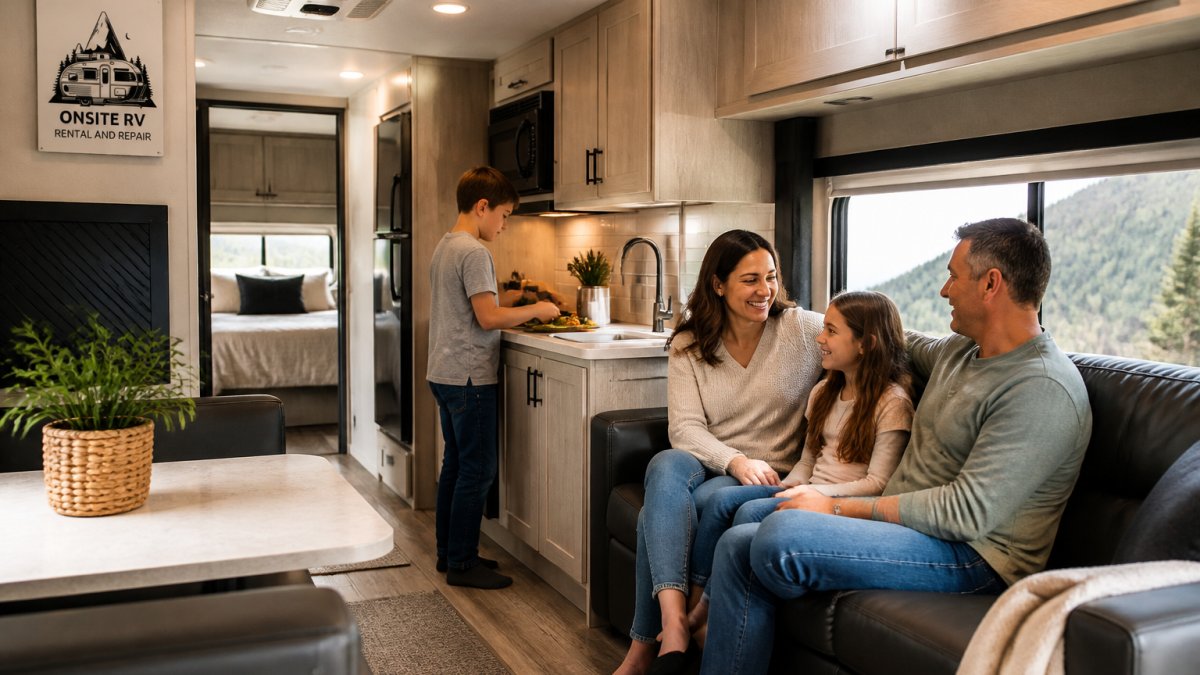
At ONSITE RV RENTAL AND REPAIR, we help families navigate these decisions by matching them with vehicles that fit their actual needs, not just their wishlist. The luxury RVs available today come with full kitchens, hot showers, climate control, and sleeping arrangements that work for real families, not just couples or solo travelers.
The key is understanding what you're paying for. Luxury doesn't always mean the biggest or most expensive. It means the right layout, reliable systems, and amenities that make your trip enjoyable rather than stressful. Below, we'll show you exactly how to choose.
Quick Comparison: Luxury RV Options at a Glance
| RV Type | Sleeping Capacity | Best For | Key Advantage |
|---|---|---|---|
| Class A Motorhome | 6-8 people | Large families, extended trips | Maximum space and hotel-style comfort |
| Class C Motorhome | 4-6 people | Medium families, balanced needs | Easier to drive, still spacious |
| Travel Trailer | 4-6 people | Families wanting flexibility | Unhitch and explore; tow-behind option |
| Fifth Wheel | 4-8 people | Families with heavy towing capacity | Luxury interior, stable towing |
| Class B Camper Van | 2-4 people | Couples, small families | Compact, fuel-efficient, nimble |
1. Class A Motorhomes: Maximum Space and Hotel-Style Comfort
A Class A motorhome is the largest option on the road. These vehicles are built on a heavy-duty chassis and can sleep six to eight people comfortably, with full-size kitchens, multiple bathrooms, and living spaces that rival a small apartment.
What makes them luxury: Class A units include slide-out sections that expand interior width, premium cabinetry, heated floors, washer-dryer combos, and entertainment systems. The driver sits high above traffic, and the open floor plan means no one feels cramped during meal prep or bad weather days.
The real advantage for families: everyone travels together. There's space for teenagers to have their own bunk area, parents get a private bedroom, and the living room becomes a gathering space. You're not splitting your group across two vehicles.
Watch out: Class A motorhomes are lengthy. They're difficult to maneuver in tight campgrounds, narrow mountain passes, and urban parking areas. Fuel costs are higher, and insurance premiums reflect the size and value.
Best for: families of five or more traveling for two weeks or longer. Skip if: you plan to explore winding coastal roads or need to park in downtown areas frequently.
2. Class C Motorhomes: The Sweet Spot for Families
Class C motorhomes are built on a truck chassis and typically measure 24-32 feet. They sleep four to six people and offer a genuine middle ground between compact camper vans and sprawling Class A units.
What makes them practical: Class C models have the driver's cab separate from the living area, a full kitchen, a bathroom with shower, and a sleeping loft above the cab. The layout is efficient without feeling claustrophobic. They're easier to drive than Class A units and park more easily at typical campgrounds.
For families specifically: Class C rentals accommodate parents plus two to three children comfortably. The galley kitchen is functional for actual cooking, not just heating pre-made meals. Most include a dinette that converts to sleeping space, a separate bedroom, and the loft for kids.
The trade-off: less interior space than Class A, and the sleeping loft can be hot in summer if ventilation isn't excellent. Some Class C models have dated interiors or cramped bathroom layouts, so specifications matter.
Best for: families of four to six traveling for 7-14 days; first-time RV renters wanting comfort without overwhelming size. Skip if: you have more than six people or need luxury finishes like granite countertops and premium appliances.
3. Travel Trailers and Fifth Wheels: Flexible Towing Options
Travel trailers and fifth wheels are towed behind a vehicle, which means you can unhitch and use your car to explore once you're at your destination. They range from 20 to 40 feet and sleep four to eight people depending on size.
Why families choose them: you're not driving a massive vehicle every day. Once parked, you have your regular vehicle back for sightseeing, grocery runs, and exploring towns. This flexibility is worth significant value for families who want to settle in one location for several days.
Fifth wheels versus travel trailers: fifth wheels attach to a hitch in the truck bed and offer more stable towing plus a master bedroom above the hitch. Travel trailers attach to a bumper hitch and are lighter, but fifth wheels give you a more spacious interior and better weight distribution.
The practical reality: not every family vehicle can tow safely. You need adequate hitch capacity, braking systems, and transmission cooling. Before booking, verify your vehicle's towing capacity against the trailer's dry weight plus cargo.
Best for: families with appropriate towing vehicles who plan to stay in one or two locations per trip. Skip if: your vehicle isn't rated for towing or you prefer not to manage hitching and unhitching.
Best RV for Family Road Trips by Trip Length and Group Size
Matching the right RV to your actual trip profile prevents buyer's remorse and hidden costs. The table below compares luxury RV options specifically for families by sleeping capacity, layout strengths, safety features, and best-fit scenarios.
| RV Type | Sleeping Capacity | Family Layout Strengths | Safety and Practical Notes | Best Trip Profile |
|---|---|---|---|---|
| Class A Motorhome | 6-8 | Private master bedroom, bunk areas, multiple bathrooms, large galley | High driving position, but lengthy demands planning for campgrounds and fuel stops; child seats must be secured to approved seating positions | Large families (5+), trips of two weeks or longer, base-camping style |
| Class C Motorhome | 4-6 | Cab-over loft for kids, dinette conversion, separate bedroom | Easier to drive and park than Class A; loft can be hot in summer; verify child-seat anchor points in the cab | Families of four to six, 7-14 day trips, first-time RV renters |
| Travel Trailer | 4-6 | Bunkhouse floor plans, separate living area, unhitch for day trips | Requires a properly equipped tow vehicle; sway control and brake controllers are essential; setup time is longer | Families with a capable tow vehicle staying in one or two locations |
| Fifth Wheel | 4-8 | Master bedroom above hitch, bunkhouse options, residential-style interiors | Stable towing but heavy; needs a large truck and hitch; setup and leveling take practice | Families with heavy towing capacity and longer stays |
| Class B Camper Van | 2-4 | Compact, efficient, easy to drive | Tight for more than two adults; limited storage; best for couples or one small child | Couples or small families on short, mobile trips |
Short trips (3-5 days) for a family of four: A Class C motorhome or compact travel trailer works best. You will not justify the fuel costs and setup time of a Class A, and you will appreciate the easier parking and driving.
Week-long trips for a family of five to six: A Class C motorhome or mid-size travel trailer gives you enough sleeping space and comfort without overwhelming logistics. You have time to settle into a routine, and the vehicle size is still manageable at varied campgrounds.
Two-week trips for a large family (six to eight people): A Class A motorhome or large fifth wheel becomes practical. The extra space justifies the fuel costs and setup complexity. Everyone sleeps well, the kitchen supports cooking full meals, and the living space prevents cabin fever.
Extended trips (three weeks or longer): Class A motorhomes shine here. The space, amenities, and comfort justify the operational costs. You are essentially living in your RV, not just camping in it.
Age-Specific Family Needs and Safety
Babies and toddlers: Confirm that the RV has approved seating positions for child seats. Not every dinette or sofa is rated for travel seating. Bring a portable crib or use a bunk with a bed rail. Keep small items and chemicals locked away, and check that cabinet latches are child-resistant.
Children: Bunk beds are a practical win, but verify mattress dimensions and guard rails. Loft beds above the cab are popular with kids but can be hot; check ventilation. Establish rules for stove and water heater use.
Teens: They need space and privacy. A layout with a separate bunk area or convertible dinette gives teens their own zone. Confirm that sleeping surfaces are long enough; a loft that is 30 inches tall will not work for a teenager.
Multigenerational travel: If grandparents or travelers with mobility needs are joining, look for step-in height, grab handles, walk-in showers, and a bedroom that does not require climbing. Class A and fifth-wheel layouts generally offer the easiest access.
Before booking, ask for detailed floor plans and photos. Verify the dimensions of sleeping areas, especially lofts and bunks. A loft that is 30 inches tall will not work for teenagers.
Understanding RV Rental Sleeping Capacity and Layout
Sleeping capacity numbers are often misleading. A Class C listed as "sleeps 6" might have a dinette that converts to a bed, a loft that's barely five feet tall, and a main bedroom, technically six spots, but not equally comfortable for six people every night.
What matters for families: how many actual beds are comfortable for adults versus children. A layout with a master bedroom plus two dedicated bunk areas is more functional than a master bedroom plus a dinette bed plus a convertible sofa. Children can sleep in bunks; parents need real beds.
Floor plans vary significantly. Some Class C units have the bathroom between the bedroom and the galley, which works well. Others have the bathroom accessible only from the bedroom, which creates privacy issues when multiple people need the facilities.
Before booking, ask for detailed floor plans and photos. Verify the dimensions of sleeping areas, especially lofts and bunks. A loft that's 30 inches tall won't work for teenagers.
RV Rental Costs and Fees: What to Budget Beyond the Nightly Rate
The nightly rental rate is just the starting point. Most families underestimate total trip costs because they focus on the rental quote and overlook fuel, mileage, insurance, campground fees, and deposits. A realistic budget prevents surprises at drop-off.
Here is how the costs stack up for a typical one-week family trip in a luxury Class C motorhome. Use these ranges as planning benchmarks, not quotes; actual amounts vary by season, vehicle, distance, and provider.
| Cost Category | Typical Range (CAD) | What Drives the Cost |
|---|---|---|
| Nightly rental rate | $250-$450 per night | Vehicle class, age, season, demand, amenities |
| Mileage fee | $0-$0.45 per km, or unlimited packages | Whether the rate includes unlimited kilometers; long routes add up fast |
| Fuel | $0.35-$0.55 per km driven | Class A: roughly 5-7 mpg; Class C: roughly 8-12 mpg; fuel price varies by province |
| Insurance/protection plan | $15-$35 per day | Deductible level, damage coverage, roadside assistance |
| Campground fees | $30-$80+ per night | Full hookups, electrical/water/sewer, location, amenities |
| Delivery and setup | $0-$500+ flat or distance-based | Whether you pick up or have the RV delivered |
| Cleaning and inspection | $75-$250 | Provider policy; some include it in the rate |
| Generator use | $3-$6 per hour | Dry camping or off-grid nights |
| Security deposit | $500-$2,000 (refundable) | Vehicle value and provider policy |
Mileage fees: Some rental companies charge per kilometer; others include unlimited mileage. A 1,500 km trip at $0.35/km adds $525. Ask whether the quote includes unlimited kilometers before comparing rates.
Fuel: RVs consume significantly more fuel than cars. A Class A might get 5-7 miles per gallon; a Class C gets 8-12 miles per gallon. Budget for your planned route and add a buffer for detours and generator use.
Campground fees: Not all nights are free camping. Many families prefer established campgrounds with hookups (water, electricity, sewer). Rates range from $30 to $80+ per night depending on location and amenities. Provincial and national park campgrounds often cost less but book early.
Insurance and protection plans: Standard rental insurance might not cover everything. Many families add protection plans that cover damage, roadside assistance, and emergency repairs. These typically cost $15-$35 per day. Check whether your personal auto policy or credit card extends any coverage to RV rentals.
Setup and breakdown fees: Some rental companies charge for delivery, setup, or final inspection. Ask upfront what is included in your rental rate.
Deposits: A refundable security deposit is standard. Confirm the amount, how it is held, and the timeline for return so it does not strain your cash flow.
For a realistic budget, compare affordable RV rental options on Vancouver Island to see how pricing breaks down across different vehicle types and seasons. This helps you understand the total cost structure before committing.
RV Rental Delivery and Setup: Getting Your Home on Wheels Ready
Most luxury RV rentals come with delivery to your location or pickup at a rental facility. Understanding what's included prevents surprises on arrival day.
Delivery: The rental company, or a third party, delivers the RV to your home, hotel, or campground. This saves you time and eliminates the stress of driving an unfamiliar large vehicle for the first time. Some companies charge flat delivery fees; others base fees on distance.
Walkthrough and orientation: A rental representative should walk you through all systems: water, propane, electrical, heating, appliances, and entertainment. This is critical. Many renters miss basic steps like filling the fresh water tank or understanding how to use the shower valve.
Hookups: If you're staying at a campground with full hookups, someone needs to connect water, sewer, and electrical lines. Some rental companies include this; others expect you to handle it or hire help.
Pre-trip inspection: Before you leave, verify that all systems work. Test the stove, refrigerator, water heater, and air conditioning. Check that all cabinets are secure and nothing is loose.
When you learn how to hire professional RV setup services, you understand what's included, how to vet technicians, and how to prepare your site. This guidance helps you avoid common setup mistakes and ensures your rental is ready before your family boards.
Book Your Family's Luxury RV Adventure
Choosing the right luxury RV for family trips isn't complicated once you match the vehicle type to your group size, trip length, and comfort priorities. Class A motorhomes deliver maximum space; Class C units offer the practical middle ground; travel trailers give you flexibility to explore.
The real difference between a great trip and a frustrating one often comes down to preparation and choosing a rental partner who understands families. When your RV breaks down on the road or systems fail, you need support you can trust.
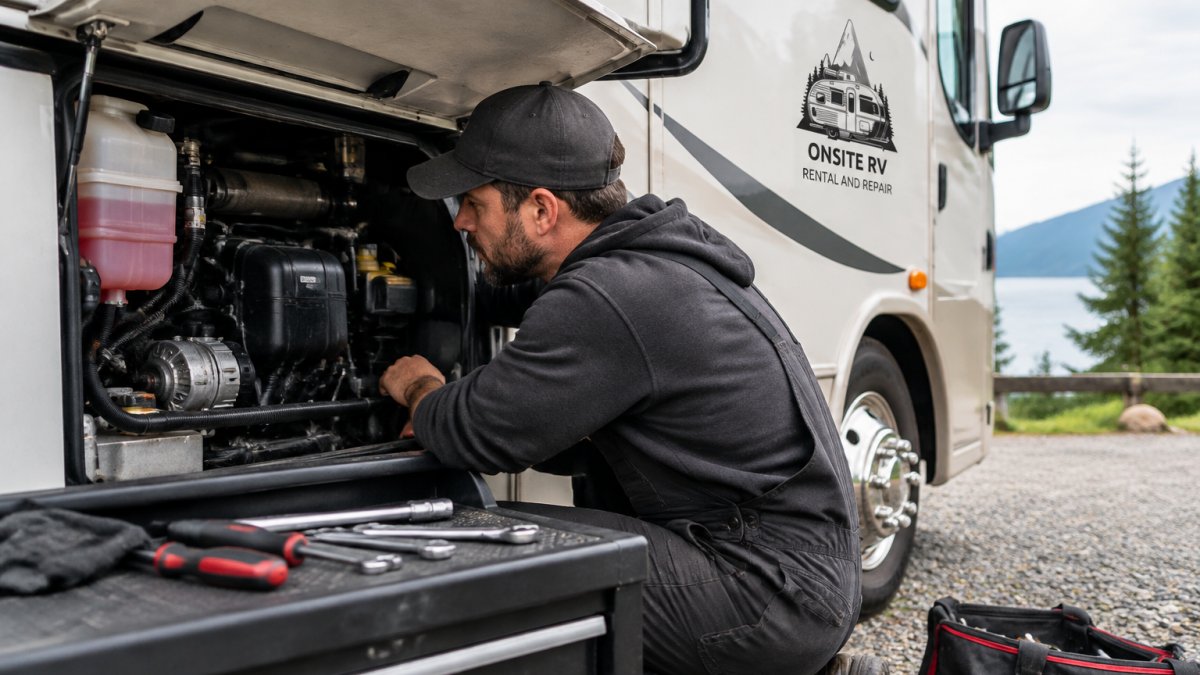
ONSITE RV RENTAL AND REPAIR provides luxury RV rentals backed by comprehensive maintenance and emergency support across your travels. Our team handles delivery, setup, and orientation so your family starts the adventure confident and ready.
Contact ONSITE RV RENTAL AND REPAIR to reserve your family's luxury RV and discuss your specific trip needs. Let us help you plan a trip where the journey itself becomes the memory.
Frequently Asked Questions
What should families look for when renting a luxury RV for a trip?
Families should prioritize sleeping capacity (enough beds for everyone), kitchen and bathroom quality, climate control for comfort, and safety features like backup cameras and stability. Consider your group's age range; young children need different layouts than teenagers or multigenerational groups. Check whether the RV includes essential amenities like a full kitchen, shower, and heating/cooling before booking. Verify insurance and roadside assistance coverage, and confirm delivery and pickup logistics fit your travel dates.
How many people can sleep comfortably in different RV rental types?
Class C motorhomes typically sleep 5-7 people depending on the model, with convertible dinettes and overhead beds. Class A motorhomes offer the most sleeping space, often accommodating 8+ people across multiple bedrooms and sleeping areas. Travel trailers and fifth wheels vary widely but often sleep 4-8 people. Always check the specific floor plan and sleeping configurations; listed capacity doesn't always mean comfortable sleeping for everyone. Bunk beds and convertible seating work better for children than adults.
What extra costs should families expect when renting a luxury RV beyond the nightly rate?
Budget for delivery and setup fees if the rental company charges for bringing the RV to your location, insurance or protection plans, mileage fees (if applicable), fuel or propane refills, campground or RV park fees, and damage deposits. Some rentals include bedding and kitchenware; others charge extra. Pet fees apply if traveling with animals. Ask your rental provider for a complete cost breakdown upfront so you're not surprised by hidden charges during your trip.
Can luxury RVs be delivered directly to a campground or my location?
Many rental companies offer delivery and setup services, though availability and fees vary. ONSITE RV RENTAL AND REPAIR provides delivery options to get your luxury RV to your starting location. Some rental marketplaces allow you to filter by delivery availability and local pickup options. Confirm with your rental provider whether they deliver to your specific campground or location, and what the setup includes (hookups, orientation).