 how-to
How to Hire Professional RV Setup Services
Table of Contents
- What Professional RV Setup Services Include
- Site Readiness and Access Checklist
- Understanding Mobile RV Repair Service Options
- How to Vet and Choose a Qualified RV Technician
- RV Plumbing System Replacement and Other Major Repairs
- Getting an Accurate RV Repair Estimate
- Safety Checks and Setup Troubleshooting
- Common Setup Mistakes to Avoid
- Frequently Asked Questions
Last Updated: October 14, 2026
What Professional RV Setup Services Include
When you hire professional RV setup services, you're paying for a documented sequence of checks and connections, not just someone who plugs in a cord and leaves. The value is in the order of operations and the verification at each step. Here is what a thorough on-site setup typically covers.
1. Site and access assessment. The technician confirms the pad or site is level enough to work on, checks overhead clearance for slide-outs and antennas, and identifies where the power pedestal, water spigot, and sewer connection sit relative to the RV's hookup points. If the site is soft, sloped, or the utilities are out of reach, this is when it gets flagged, before the RV is positioned.
2. Positioning and leveling. The RV is spotted so hookups reach without strain, then leveled side-to-side and front-to-back using leveling blocks, ramps, or the onboard leveling system. Stabilizing jacks are deployed to reduce movement; they are not meant to lift the RV off its tires. Leveling matters because absorption refrigerators, tank drains, and slide-out mechanisms all depend on a near-level coach.
3. Electrical hookup. The technician verifies pedestal amperage (commonly 30-amp or 50-amp), inspects the breaker and receptacle for damage or heat marks, and connects the shore power cord with the correct adapter if needed. Polarity and ground are checked before loads are applied. Surge protection or an EMS (electrical management system) is confirmed in line where the owner has one.
4. Water hookup. A pressure regulator is installed at the spigot, a fresh water hose rated for potable use is connected, and the system is pressurized to check for leaks at the city water inlet, water heater, and fixtures. If the RV uses a fresh water tank and pump, the technician confirms the pump builds pressure and the tank fills and drains correctly.
5. Sewer hookup. The sewer hose is connected with the correct bayonet fitting, supported so it drains downhill, and the termination valves are checked for leaks. The technician confirms the black and grey tank valves operate and that the vent stack is clear.
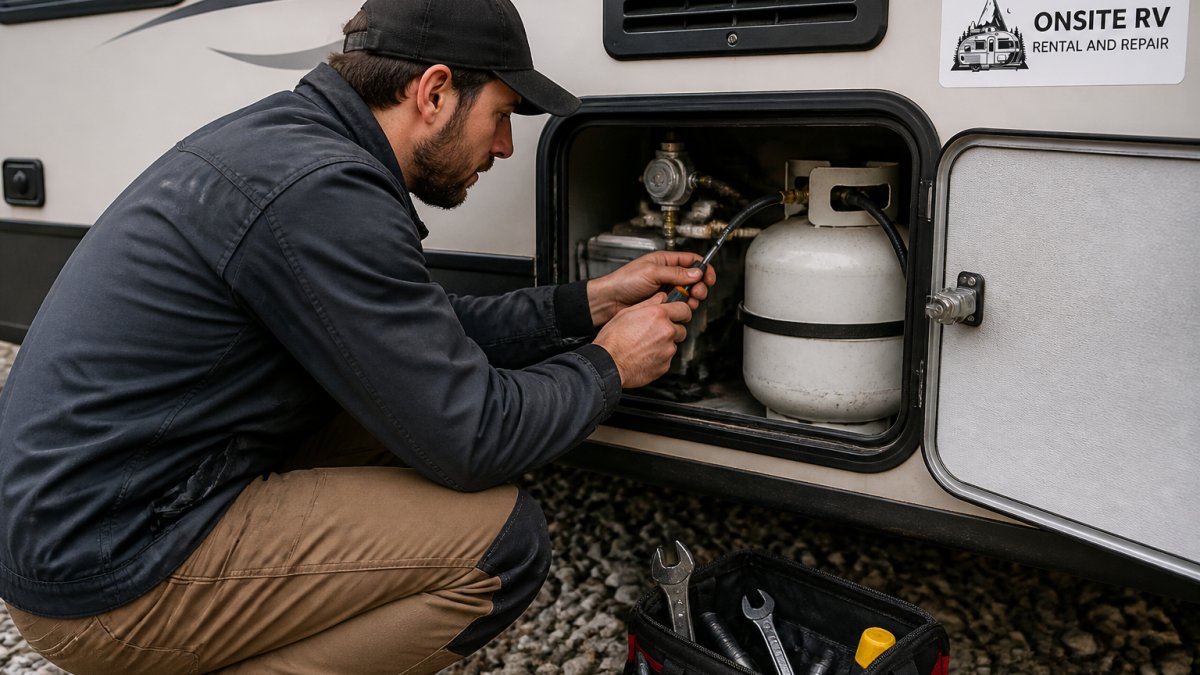
6. Propane and appliance checks. Propane lines are leak-tested at connections, the regulator is checked, and each appliance, furnace, water heater, stove, refrigerator, is fired up and observed. The technician confirms the refrigerator cools on both electric and propane modes and that the furnace ignites and holds.
7. Systems walkthrough. Slides, awnings, roof vents, and the entry step are cycled. The technician walks the owner through the control panel, explains any quirks specific to the unit, and documents what was found.
What is usually not included: major repairs discovered during setup, replacement parts beyond consumables, and any work requiring the RV to be moved to a shop. Those are quoted separately. Clarify this boundary before booking so the setup visit doesn't turn into an open-ended repair bill.
At ONSITE RV RENTAL AND REPAIR, our setup visits follow this sequence and end with a walkthrough so you understand what was checked and what to watch. If a system fails a check, we tell you before you rely on it.
Site Readiness and Access Checklist
Before a technician arrives, your site needs to be prepared properly. Poor site preparation can delay service, damage your RV, or create safety hazards during setup.
Start by measuring access routes. Your RV needs a clear path with adequate width and height clearance. Many driveways and property entrances are narrower than RV owners realize. Measure gates, tree branches, power lines, and any obstacles. Communicate these dimensions to your service provider before they arrive.
Check ground conditions carefully. Soft soil, gravel, or uneven terrain can cause your RV to settle unevenly or sink into the ground, making leveling difficult and potentially damaging stabilizing jacks. If your site has poor drainage or soft ground, let your technician know in advance so they can bring appropriate equipment or suggest alternatives.
Verify utility access points are clear and accessible. Your water connection, electrical pedestal, and sewer cleanout need to be reachable without moving your RV or creating safety hazards. If these are buried, covered by vegetation, or blocked by structures, have them exposed and accessible before service begins. Technicians can't connect systems they can't reach safely.
Clear overhead hazards. Power lines, tree branches, and roof overhangs can damage your RV during positioning. Mark any low-hanging obstacles so your driver can navigate around them. A few minutes of preparation prevents expensive damage.
Understanding Mobile RV Repair Service Options
Mobile RV repair services come to your location, which saves you the hassle of towing your RV to a shop. This convenience comes with trade-offs you should understand before booking.
Mobile technicians can handle most routine repairs and maintenance on-site: brake service, fluid changes, filter replacements, appliance repairs, and electrical diagnostics. They arrive with common replacement parts and tools, and they can complete many jobs without moving your vehicle.
However, major structural repairs, collision damage, or work requiring specialized equipment may still require a trip to a service facility. Mobile technicians also have limits on how long they can spend at your location. A complex repair that takes six hours might be split across multiple visits, extending your timeline.
Weather affects mobile service availability. Technicians can't safely work on electrical systems in heavy rain, and cold temperatures affect battery performance and propane system diagnostics. Schedule mobile service during favorable weather when possible.
ONSITE RV RENTAL AND REPAIR operates both mobile service that travels to your location and an in-shop facility in Port Alberni. This dual approach means we can handle jobs on-site when possible and refer you to the shop only when necessary, keeping your downtime minimal.
How to Vet and Choose a Qualified RV Technician
Not all RV technicians have equal expertise, and the difference between a qualified setup professional and someone who learned from videos can cost you thousands in damage or create a safety hazard. Use the questions below as a screening script; the answers tell you more than any review score.
Ask about training and certification. In Canada, there is no single mandatory license for RV technicians, so credentials vary. Look for completion of an RV technician apprenticeship or a recognized training program, and ask whether the technician holds manufacturer-specific certifications for the systems in your unit (for example, appliance or chassis brands). A generalist is fine for routine setup; a specialist matters for complex electrical or propane work.
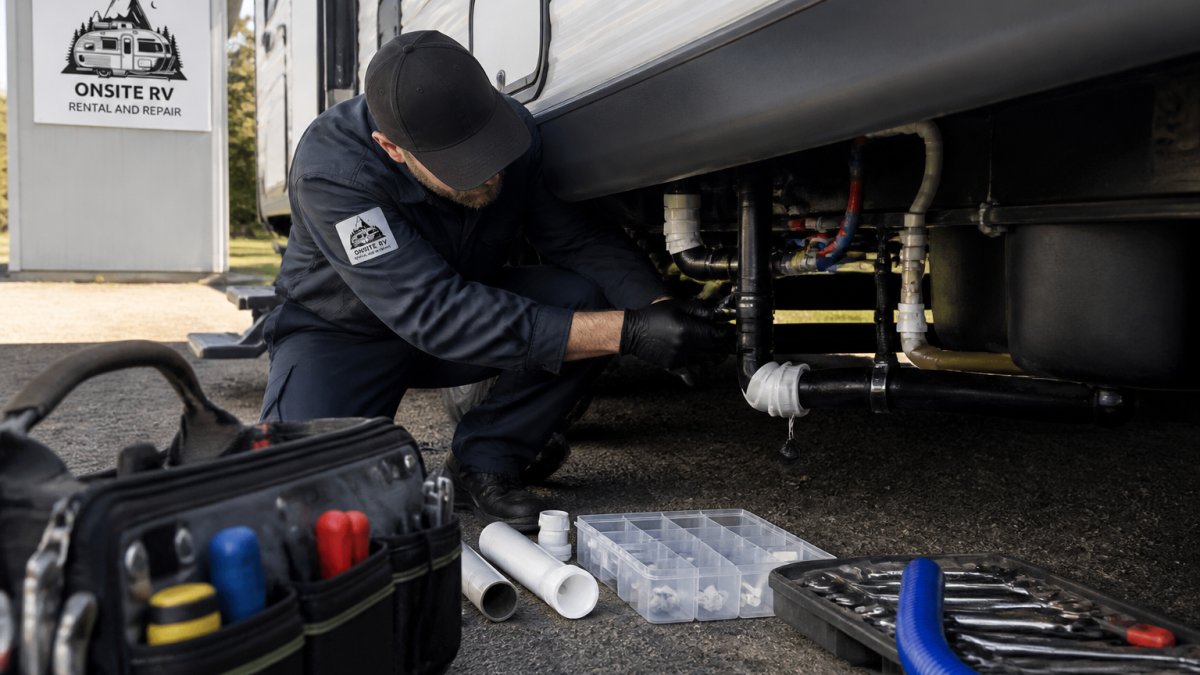
Ask these specific questions before booking:
- What exactly does your setup service include, and what is excluded?
- Do you provide a written estimate or flat rate before the visit?
- Are you insured, and can you send proof of coverage before work begins?
- How do you handle a problem you find during setup that wasn't in the original scope?
- What is your warranty on labor, and how do I make a claim?
- How many setups have you done on my specific RV type and model year?
- What is your service area, and is there a travel charge to my location?
- What happens if weather prevents the visit?
Verify insurance and liability coverage. A qualified technician carries liability insurance that protects you if something is damaged during service. Ask to see proof of coverage before work begins; this protects both parties and is a normal request for a professional.
Check references directly. Online reviews are useful but easy to game. Ask for two or three recent customers you can call, and ask whether the technician arrived on time, completed the work as quoted, explained issues clearly, and stood behind the work when something went wrong.
Confirm experience with your RV type. A technician experienced with travel trailers may have limited experience with motorhomes, fifth wheels, or specific model years. RV systems vary significantly by manufacturer and year, so someone familiar with your layout will work faster and catch problems others miss.
Watch for red flags: no written estimate, reluctance to show insurance, no warranty on labor, pressure to pay cash upfront, or vague answers about what the setup includes. Any one of these is a reason to keep looking.
ONSITE RV RENTAL AND REPAIR operates both mobile service that travels to your location and an in-shop facility in Port Alberni, so we can handle most setup and repair work on-site and refer you to the shop only when the job requires it.
RV Plumbing System Replacement and Other Major Repairs
RV plumbing systems fail more often than other systems because they're exposed to temperature extremes, vibration, and constant pressure changes. When your RV plumbing system replacement becomes necessary, it's a significant undertaking.
Plumbing replacement typically involves removing old pipes, fittings, and tanks, then installing new components. The scope depends on what's failing. You might need to replace only the water heater, or you might need to replace the entire freshwater and greywater system. A professional assessment determines what actually needs replacement versus what just needs repair.
Quality matters with plumbing components. Cheap PEX tubing and low-grade fittings fail quickly in RVs because of vibration and temperature cycling. Professional technicians use components rated for RV use and install them with proper support and protection. This costs more upfront but prevents failures that strand you in remote locations.
Electrical system repairs are equally complex. RV electrical systems combine 12-volt DC (battery), 120-volt AC (shore power), and sometimes 240-volt service. Mistakes in electrical work create fire hazards and equipment damage. Only qualified technicians should work on RV electrical systems. This isn't an area for DIY learning.
Appliance replacements like refrigerators, stoves, and water heaters require both mechanical and electrical work. A refrigerator that runs on propane, 12-volt DC, and 120-volt AC simultaneously is more complex than a home appliance. Professional installation ensures proper operation and safety.
Getting an Accurate RV Repair Estimate
Before authorizing any repair work, you need a clear estimate of costs and timeline. Vague estimates lead to surprise bills and frustration.
Request a written estimate that details the work to be performed, parts required, labor hours, and total cost. A good estimate breaks down labor separately from parts so you understand where your money goes. If the technician says "I'll need to look at it first," that's fine, but get a time estimate for the diagnostic and the maximum cost you'll authorize before they dig deeper.
Ask about parts availability. If a specific part isn't in stock, how long will it take to arrive? Will you be charged for storage or additional labor if the repair extends? Understanding the timeline prevents surprises.
Clarify what happens if the technician discovers additional problems during work. Do they stop and contact you before proceeding, or do they fix everything and bill you? Most professionals will call you if the scope expands beyond the original estimate. Confirm this expectation upfront.
Understand warranty terms. What does the warranty cover? How long does it last? What's the process if something fails under warranty? A 30-day parts warranty is standard; some technicians offer longer coverage.
Get the estimate in writing and keep it. If the final bill differs significantly from the estimate, you have documentation to reference.
Safety Checks and Setup Troubleshooting
Safety should be your first priority during RV setup. A few simple checks prevent dangerous situations and costly damage.
Test all safety systems before your trip. Smoke detectors, carbon monoxide detectors, and propane detectors should all function. These devices save lives. Replace batteries if needed and verify they alarm when tested.
Check brake operation before leaving. Have someone outside watch your brake lights while you press the pedal. Verify that your trailer brake controller (if applicable) is functioning. Brake failure on the road is catastrophic.
Verify that all exterior lights work: headlights, taillights, turn signals, and brake lights. A burned-out brake light puts you at legal and safety risk.
Test your water systems before relying on them. Run water through all faucets to flush the lines. Check for leaks under sinks and at connection points. A slow leak in your cabinet can cause mold and structural damage.
Confirm that your heating and cooling systems respond to thermostat changes. During setup, have your technician demonstrate how to adjust temperature and explain any quirks specific to your RV's system.
Common Setup Mistakes to Avoid
Many RV owners make predictable mistakes during setup that damage their vehicle or create safety hazards.
Connecting to an undersized electrical pedestal is a common error. If your RV requires 50-amp service and you connect to a 30-amp pedestal, you risk fire. Verify pedestal amperage before connecting. If it's insufficient, find another location or use a different power source.
Over-tightening sewer connections causes cracking and leaks. Technicians know the correct torque for each fitting. DIY owners often assume "tighter is better," which breaks fittings and creates messy problems.
Failing to level your RV affects refrigerator operation, cabinet door closing, and overall comfort. Leveling isn't optional; it's essential. Most modern RVs have automatic leveling systems, but older models require manual leveling with jacks. Your technician will ensure this is done correctly.
Forgetting to open vents and windows during setup prevents moisture buildup and mold. Your RV needs ventilation, especially after water system connections or humidity from recent weather.
Not securing stabilizing jacks and leveling equipment before departure causes damage and safety hazards. Everything must be stowed properly before you move the RV.
Skipping the water system flush allows old sediment and treatment chemicals to contaminate your fresh water. A professional flush removes these contaminants and ensures safe drinking water.
Hiring professional RV setup services protects your investment and ensures your safety on the road. The difference between a rushed DIY setup and a thorough professional inspection often appears weeks into your trip, when you're far from home and repair options are limited. ONSITE RV RENTAL AND REPAIR handles comprehensive setup, diagnostics, and repairs across Vancouver Island. We travel to your location for mobile service or work in our Port Alberni shop for major repairs. Get started with ONSITE RV RENTAL AND REPAIR and ensure your RV is safe, reliable, and ready for your next adventure. Call us to book an appointment.
Frequently Asked Questions
What does a professional RV setup service include?
Professional RV setup services typically cover utility hookups (water, sewer, and power connections), leveling and stabilizer deployment, appliance and electrical system checks, propane system inspection, plumbing verification, and safety diagnostics. Technicians may also inspect the vehicle's chassis, brakes, and mechanical systems. The exact scope depends on your RV type, age, and specific needs. Contact your service provider to confirm which services are included in their setup package.
How do I choose a qualified RV technician or mobile repair service?
Look for technicians with certifications specific to RV systems, verifiable experience with your RV type, and positive customer references. Ask whether they carry liability insurance and offer warranties on their work. Request a detailed written estimate before work begins, and confirm they can handle both routine maintenance and complex repairs like plumbing or electrical system work.
How much does professional RV setup or repair cost?
Pricing depends on the scope of work, your RV's age and condition, parts availability, and the complexity of repairs. Setup services may cost differently than major repairs like plumbing system replacement. Rather than guessing at costs, contact your service provider directly for a detailed quote based on your specific situation. Always ask for a written estimate that breaks down labor, parts, and any additional fees before work begins.
Can a professional RV technician come to my campsite or home?
Many professional RV repair services offer mobile service, meaning they travel directly to your location. This is particularly helpful for owners who can't transport their RV to a shop or who need repairs at a seasonal site. Mobile service availability depends on your location and the service provider's service area. In-shop service is also available at many providers' facilities. Confirm with your chosen technician whether they offer mobile service in your area.