 How-to
7 RV Furnace Troubleshooting Steps That Fix Most No-Heat Issues
Quick Summary
Start by checking what the furnace does when it runs: silent, clicking without flame, blowing cold air, or running without heat. Then confirm the thermostat is set to heat, power is reaching the furnace, and propane is flowing. Most no-heat issues are solved by these rv furnace troubleshooting checks before any parts need replacing.
- Set the thermostat to heat and raise the setpoint at least 5 degrees above room temperature.
- A house battery reading near 11.0 to 11.5 volts under load suggests batteries too weak to start the furnace reliably.
- Check tank level, valve position and regulator before testing further when the furnace clicks but produces no flame.
- Do not keep pressing reset or ignition repeatedly, because repeated attempts can flood the burner with propane.
- A burner that runs only two to five minutes before shutting down suggests a limit-switch trip from restricted airflow.
Table of Contents
- Start With the Symptom: What Your RV Furnace Is Doing
- Step 1: Confirm the Thermostat and Power Supply
- Step 2: Check Propane Supply, Tank Level and Gas Flow
- Step 3: Diagnose an RV Furnace Not Igniting
- Step 4: Work Through RV Furnace Sail Switch Problems
- Step 5: Fix an RV Furnace Blowing Cold Air
- Safe Electrical Testing and Propane Leak Response
- Maintenance That Prevents Repeat Furnace Failures
- When to Call an RV Furnace Repair Technician
- Frequently Asked Questions
Start With the Symptom: What Your RV Furnace Is Doing
Last Updated: November 2, 2026
A cold RV is frustrating, but the symptom tells you a lot. Clicking, blowing cold air, and sitting silent point to very different causes, so the first question is always what the furnace is doing right now.
Use the list below to match what you see and hear with a likely starting point.
- Silent, with no sound at all: Usually a power or thermostat problem.
- Clicking, but no flame: The igniter is trying, but gas or ignition isn't reaching the burner.
- Fan runs, no heat: Air is moving, but the burner isn't firing or the heat exchanger isn't warming.
- Blowing cold air: The fan is running before the burner has heated up, or the burner has shut off.
Watch out: Do not keep pressing the reset or ignition button over and over. Repeated attempts can flood the burner with propane and create a hazard.
The seven steps that follow move from the simplest checks to the more involved ones. Work in order. Many no-heat problems are solved before you reach Step 3.
Step 1: Confirm the Thermostat and Power Supply
Start with the thermostat. It is the most common cause of a furnace that won't respond, and it takes only a minute to check.
- Set the thermostat to heat, not cool or off.
- Raise the setpoint at least 5 degrees above the room temperature.
- Check that the display is lit. A blank screen points to a power problem.
Next, confirm the furnace has electrical power. Most RV furnaces run on 12-volt DC from the house batteries, and many also draw from the converter. A weak battery can prevent ignition even when the thermostat is working.
Check these items:
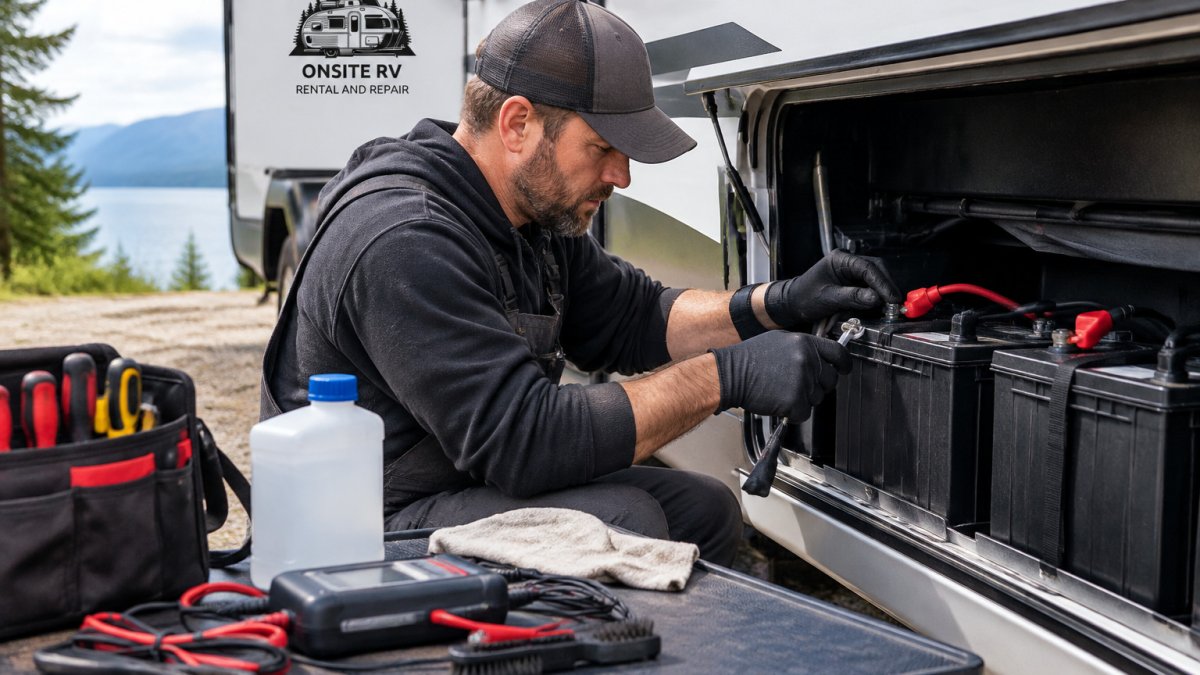
- Check the house battery voltage with a multimeter. A reading near 11.0 to 11.5 volts under load suggests the batteries are too weak to start the furnace reliably.
- Look for a blown fuse or a tripped breaker on the furnace circuit.
- Inspect the wiring at the furnace and thermostat for loose or corroded connections.
Battery health matters more in winter, when cold temperatures reduce battery output. If the voltage drops sharply when the furnace tries to start, charge the batteries or check the converter before going further. For a deeper look at 12-volt faults, our guide on troubleshooting RV electrical system issues covers batteries and shore power in more detail.
Step 2: Check Propane Supply, Tank Level and Gas Flow
A furnace can have perfect power and still produce no heat if gas isn't reaching it. Check the propane side next.
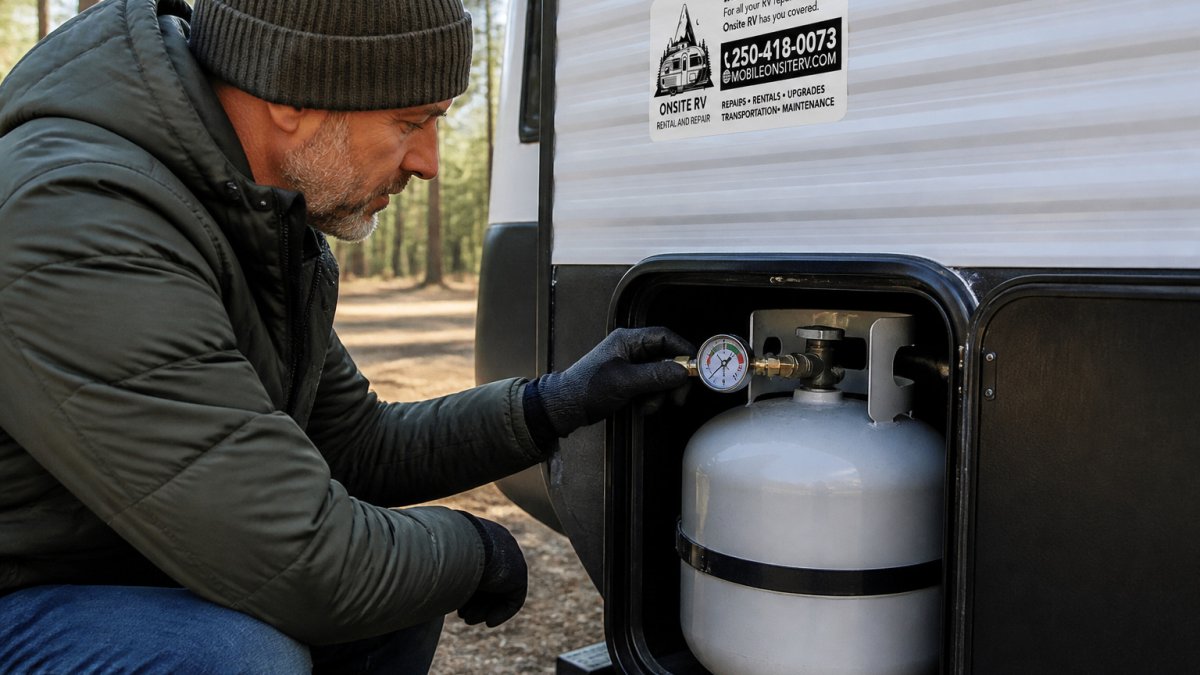
- Confirm the tank has fuel. Use the gauge or weigh the tank if the gauge is unreliable.
- Make sure the tank valve is fully open.
- Check the regulator. A regulator that is frozen, damaged, or set to the wrong pressure can starve the burner.
- Listen for the gas smell at the furnace area before anything else. If you smell propane, stop and follow the safety steps later in this guide.
If the tank is low, refill or swap it before testing further. A furnace that clicks several times and then shuts down often has gas flow trouble rather than an electrical fault.
Step 3: Diagnose an RV Furnace Not Igniting
A furnace that clicks or cycles without lighting is the most common no-heat complaint. To diagnose it well, it helps to know what a normal start looks like, because the point where the sequence stops tells you which component to suspect.
What a normal ignition sequence sounds like
On most 12-volt RV furnaces, a healthy start follows a predictable order:
- The thermostat calls for heat and sends 12-volt power to the furnace control board.
- The blower starts and runs for a short purge period, typically 15 to 30 seconds, to clear the combustion chamber.
- The sail switch closes once airflow is confirmed.
- The gas valve opens and the igniter sparks. You hear a rapid clicking, then a soft whoosh as the burner lights.
- The flame sensor confirms flame, and the blower continues running until the thermostat is satisfied.
If you hear clicking but no whoosh, the spark is present but gas or flame confirmation is failing. If you hear the blower but no clicking at all, the board may not be commanding ignition, often a sail switch, limit switch, or control-board fault. If you hear nothing, go back to Step 1.
Match the failure point to the likely cause
- Clicks, no flame, then shuts down: Gas is not reaching the burner, or the flame sensor is not proving flame. Check tank level, valve position, and regulator first, then clean the flame sensor.
- No click at all, blower runs: The control board is not commanding ignition. Suspect the sail switch (Step 4), a tripped limit switch, or a board fault.
- Weak or intermittent spark: The igniter electrode may be dirty, cracked, or mis-gapped. Electrode gap varies by model, check your furnace manual rather than guessing.
- Lights, then goes out after a few seconds: The flame sensor is not detecting flame, or gas pressure is marginal. A dirty sensor is the most frequent cause.
- Repeated click-then-lockout: Many boards lock out after a set number of failed ignition attempts (commonly three) and require a thermostat cycle or power reset to retry. Do not keep forcing retries.
Check the burner area safely
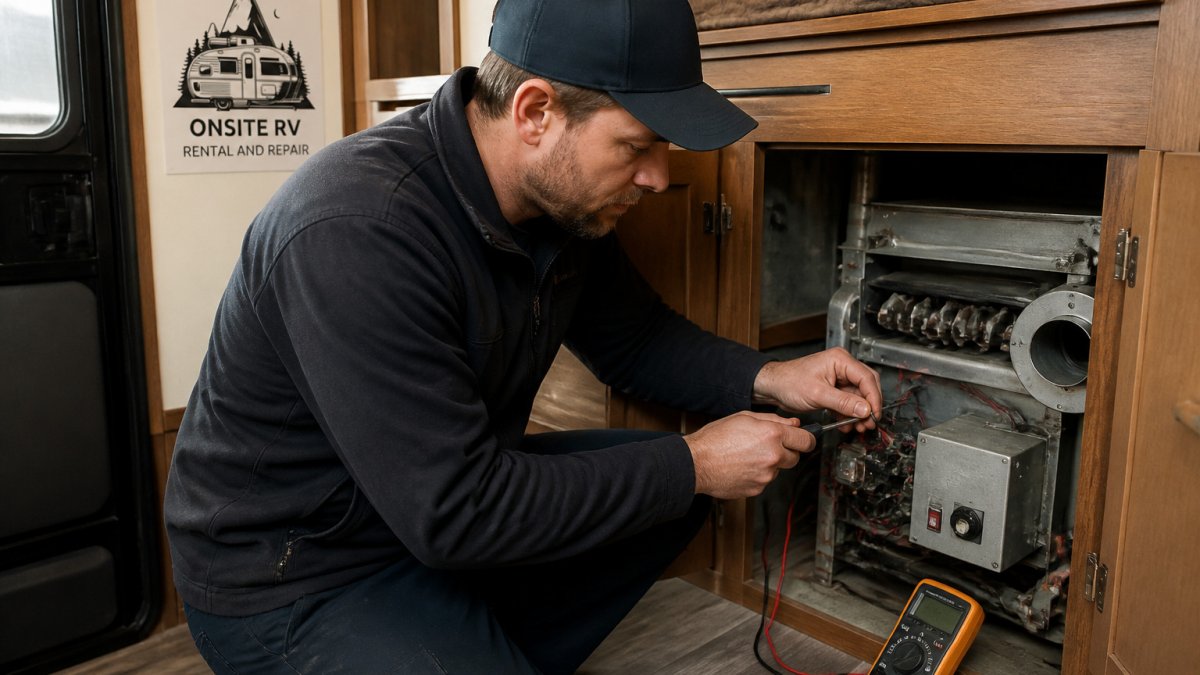
- Turn off the propane at the tank and shut off furnace power before opening any combustion-area cover.
- Look for insect nests, mud dauber plugs, soot, or rust flakes blocking the burner tube or air intake.
- Gently clean the flame sensor with fine emery cloth, a coating on the sensor is a frequent cause of shutdown.
- Inspect the igniter electrode for cracks or heavy carbon, but do not bend it without the manual's gap spec.
- Reassemble, restore gas, and try one reset cycle. If it lights, watch for a repeat before assuming the fix is permanent.
Model differences matter here
Wiring, igniter gap, lockout behavior, and fault-code displays vary widely between furnace brands and vintages. Some boards flash an LED code; others show nothing. Before replacing an igniter or control board, find the data plate inside the furnace cover and locate the matching manual, the model number and serial number are usually printed there. A board that looks identical across two models can have different pinouts.
If the furnace still won't light after these checks, the igniter, gas valve, or control board may need replacement. That is a good point to call a technician rather than swap parts by guesswork.
Match where the ignition sequence stops to the most likely cause.
| Symptom | Likely cause | Action |
|---|---|---|
| Clicks, no flame, then shuts down | Gas not reaching burner or flame not proven | Check tank, valve and regulator, then clean flame sensor |
| No click, blower runs | Control board not commanding ignition | Check sail switch, limit switch or board |
| Weak or intermittent spark | Dirty, cracked or mis-gapped igniter | Check electrode and gap against manual spec |
| Lights, then goes out after seconds | Flame sensor not detecting flame or marginal gas pressure | Clean the flame sensor first |
| Repeated click-then-lockout | Board locks out after failed attempts (commonly three) | Stop retrying; cycle thermostat or reset power |
Step 4: Work Through RV Furnace Sail Switch Problems
The sail switch is a safety device that confirms the blower is moving air before the burner fires. If it doesn't detect airflow, the furnace will refuse to light, which can look like an ignition problem.
Check these points:
- Make sure the blower wheel turns freely and isn't blocked by debris.
- Look at the vent path for obstructions, including the exhaust and air intake.
- Inspect the sail switch itself. Its small paddle or diaphragm should move when air flows.
- Check the wiring and connector at the switch for corrosion or looseness.
A common mistake is replacing the sail switch when the real problem is a weak blower or a blocked vent. Confirm airflow first. Then test the switch.
Sail switch problems can also be confused with a fault in the limit switch, which protects against overheating. Note whether the blower runs and whether the furnace shuts down after a few minutes, since that pattern helps narrow the cause.
Step 5: Fix an RV Furnace Blowing Cold Air
Cold air from the vents is not one problem, it is at least two, and the fix depends on which pattern you have. The fastest way to narrow it is to time what happens after the thermostat calls for heat.
Pattern A: The blower runs, but the burner never fires
If the fan runs continuously and you never hear the burner light, the furnace is moving room air only. Work through the ignition path:
- Confirm the thermostat is set to heat and the setpoint is above room temperature.
- Confirm propane is available and the tank valve is open.
- Listen for the click of the igniter. No click points to the sail switch, limit switch, or control board; clicking without a whoosh points to gas or flame-sensor trouble.
- Check the sail switch and vent path as described in Step 4.
In this pattern the cold air is simply the blower doing its purge-and-circulate job while the burner stays off.
Pattern B: The burner lights, then shuts down and the fan keeps blowing
This is the short-cycle pattern, and it is the one owners most often misdiagnose. The sequence usually looks like this:
- Burner lights and heat begins.
- After a few minutes, the burner shuts off.
- The blower keeps running and pushes cooling air through the ducts.
- The furnace may retry, or it may stay off until the thermostat cycles.
A common cause is a tripped limit switch. The limit switch is a safety device that opens when the heat exchanger gets too hot, usually because airflow is restricted. When it opens, the burner shuts off but the blower keeps running to cool the exchanger. That is why you feel cold air instead of no air.
Check for restricted airflow before replacing anything:
- Dirty or clogged air filters.
- Closed or blocked return-air vents and floor registers.
- Crushed or disconnected ducting.
- Debris or nests in the blower wheel or combustion air intake.
- A weak blower that moves too little air to satisfy the sail switch or keep the exchanger cool.
Pattern C: Cold air right at startup
Some furnaces run the blower briefly before the burner lights as part of the purge cycle. A short burst of cool air at startup is normal. If the air never warms, treat it as Pattern A.
A quick timing test
Run one heat cycle and note three times: when the blower starts, when the burner lights (if it does), and when the burner shuts off. A burner that runs only two to five minutes before shutting down strongly suggests a limit-switch trip from restricted airflow. A burner that never lights points back to Step 3. A burner that lights and runs but the air stays cool may indicate a heat-exchanger or ducting problem that needs a technician.
If airflow checks are clean and the furnace still short-cycles, the limit switch, blower, or control board may be failing.
Safe Electrical Testing and Propane Leak Response
Some of the steps above involve live wiring or gas. Keep these safety rules in mind:
- Turn off the furnace and disconnect power before opening the wiring compartment.
- Use a multimeter rated for 12-volt DC work, and set it correctly before testing.
- Never bypass a safety switch, such as the sail switch or limit switch, to force the furnace to run.
- Keep the battery terminals clean and tight, and avoid short circuits with metal tools.
If you smell propane, act immediately:
- Turn off the propane tank valve at the tank.
- Do not operate light switches, fans, or electrical devices.
- Open windows and doors to ventilate the RV.
- Leave the area and call your propane supplier or emergency services from a safe distance.
Do not restart the furnace until a qualified technician has inspected the system and found the leak.
Maintenance That Prevents Repeat Furnace Failures
Most no-heat calls happen because of problems that build up over time. A short maintenance routine prevents many of them.
Each season, consider these tasks:
- Clean or replace the air filters and check return vents for blockages.
- Inspect and clean the burner area, looking for insect nests and soot.
- Gently clean the flame sensor and check the igniter.
- Check the propane regulator and tank connections for leaks or damage.
- Test the house battery voltage, and charge or replace weak batteries.
- Confirm the thermostat settings and wiring are secure.
A yearly inspection can catch small issues before they turn into a cold-night emergency.
When to Call an RV Furnace Repair Technician
Some problems are safe for owners to check. Others need a trained technician. Call for professional help if you see any of these:
- The furnace still won't ignite after you have checked power, propane, and airflow.
- The igniter, control board, or gas valve appears faulty.
- You smell propane or suspect a gas leak.
- The furnace shuts down repeatedly, even after you have cleared the vents.
- You have a model with unusual wiring or an older design that you can't diagnose confidently.
ONSITE RV RENTAL AND REPAIR offers mobile service that travels to the customer on Vancouver Island. You can also contact ONSITE RV RENTAL AND REPAIR through the website for service on Vancouver Island.
Frequently Asked Questions
Why does my RV furnace click but not ignite?
A clicking sound with no flame usually means the igniter is sparking but gas is not reaching the burner, or the flame sensor is not confirming a flame. Check that the propane tank valve is open and the tank has fuel, then confirm the 12-volt supply is steady. If the furnace clicks several times and locks out, wait a few minutes and try a reset. Repeated lockouts point to a gas supply problem, a dirty flame sensor, or a faulty control board that should be inspected by a qualified technician.
Why is my RV furnace blowing cold air?
Cold air from the vents often means the furnace is running the blower before the heat exchanger has warmed, or the burner is not lit at all. Check the thermostat is set to heat and above room temperature. Look for a dirty air filter or blocked return vent, which restricts airflow. If the blower runs but the burner stays off, the furnace is not producing heat, and the ignition and gas steps above should be followed next.
How do I check whether an RV furnace is getting power?
Check the house battery voltage with a multimeter. A healthy 12-volt system typically reads around 12.6 volts when charged, and the furnace may fail to start when voltage drops toward 11.0 to 11.5 volts under load. Check the furnace fuse and any circuit breaker in the 12-volt panel. Confirm the ground connection is clean and tight. If voltage is good at the furnace leads but the unit still does not respond, the fault is likely in the control board or wiring and should be checked by a technician.
When should I call an RV furnace repair technician?
Call a technician if the furnace locks out after several reset attempts, if you smell gas, or if you find scorching, melted wiring, or a failed control board. Professional help is also worthwhile when the sail switch or limit switch keeps tripping after cleaning and airflow checks. ONSITE RV RENTAL AND REPAIR offers mobile service that travels to the customer on Vancouver Island and in-shop service. For current pricing or a quote, contact the team through the website.
Getting your RV furnace back to work often comes down to a few careful checks in the right order. Start with the thermostat and power, confirm propane flow, and only then move to the burner and sensors. When the problem goes beyond these steps, a professional visit is the safest next move.