 how-to
What to Do If Your Rental RV Breaks Down
Table of Contents
- Stop, Assess, and Stay Safe: Your First Steps When a Rental RV Breaks Down
- Who to Contact First: The Rental Company or Owner
- Understanding Rental RV Repair Responsibility
- Rental RV Roadside Assistance and Emergency Support
- Rental RV Towing: When and How It Happens
- Documenting Damage and the Breakdown Event
- Insurance Coverage and Who Pays for Repairs
- What Happens If Your Rental RV Cannot Be Repaired During Your Trip
- Preventing Breakdowns: Pre-Trip Inspection Checklist
- Frequently Asked Questions
Last Updated: October 9, 2026
Stop, Assess, and Stay Safe: Your First Steps When a Rental RV Breaks Down
When your rental RV breaks down on the road, the first minutes matter most. Your safety comes before anything else. Here's what to do immediately when a rental RV breaks down.
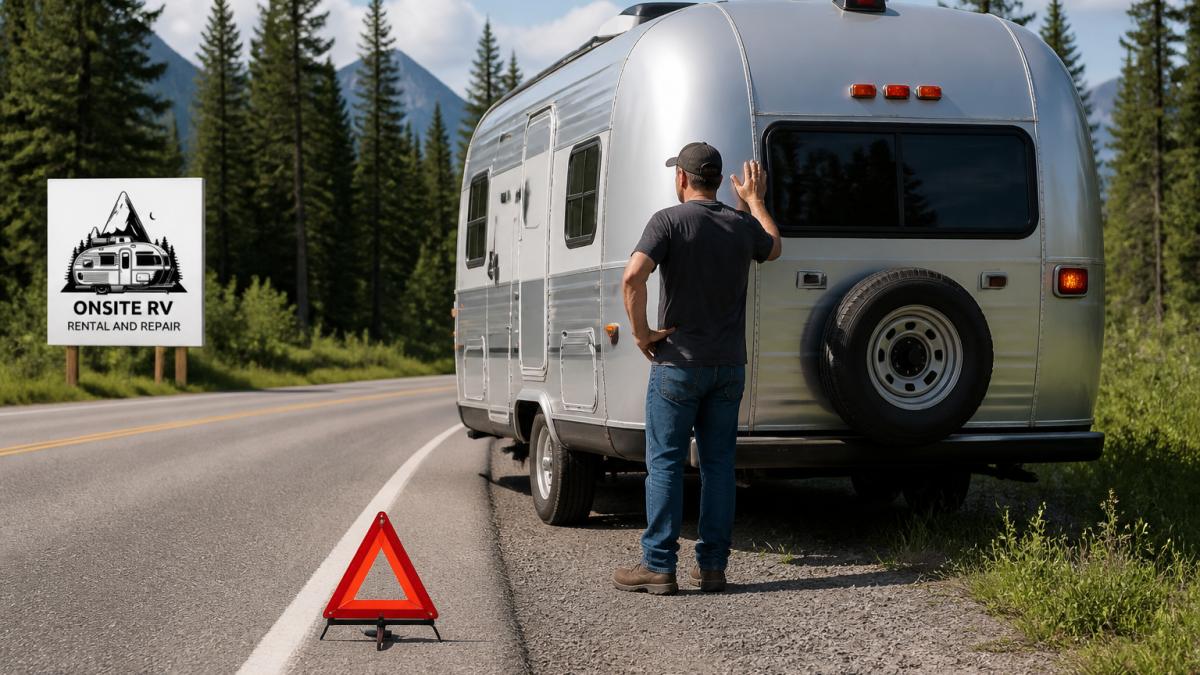
Find a safe location. If you're on a highway, move the RV to the shoulder if it's safe to do so. Turn on your hazard lights right away. If you cannot move the RV safely, stay inside with your seatbelt on and call for help immediately.
Check for immediate hazards. Look for smoke, flames, or strange smells. Do not touch the engine or any hot parts. If you smell propane or see fire, exit the RV and move at least 100 metres away. Call emergency services by dialing 911.
Gather information about the breakdown. Note the exact time and location. Write down what you heard, felt, or saw before the breakdown happened. Take photos of the RV's position and any visible damage. This information helps the rental company and roadside assistance teams respond faster.
Who to Contact First: The Rental Company or Owner
Your first call should go to the rental company or RV owner, not a repair shop. They manage the rental agreement and insurance. They also control who can work on the RV and what repairs are authorized. But "call the company" is only the first move, the order of contacts after that determines whether you get help fast or get stuck waiting.
The contact order that works.
- Emergency services (911), only if there is fire, injury, a fuel or propane leak, or the RV is blocking a live traffic lane. Safety overrides every other call.
- The rental company's 24/7 emergency line. This is the number in your rental agreement, not the general booking line. Call it before you call anyone else.
- The roadside assistance provider named in your rental documents. The rental company will usually patch you through, but if you have the number saved, calling directly can save time.
- Your own insurer's claims line, but only after the rental company has been notified, and only if you may be responsible for damage.
- The rental platform (if you booked through a marketplace rather than a company), if the owner or company is unresponsive, the platform's resolution channel is your next lever.
What to have ready before you dial. A stressed call wastes minutes. Have these in front of you:
- Your rental agreement number and the reservation name
- The RV's licence plate and unit number
- Your exact location, drop a pin in your maps app and read the coordinates, or name the highway, direction of travel, and nearest exit or kilometre marker
- A one-sentence description of the symptom ("engine temperature climbed into the red and steam came from the hood")
- Whether anyone is injured and whether the RV is in a live traffic lane
A short script you can read. "This is [name], reservation [number]. Our RV has broken down at [location]. The symptom is [description]. No one is injured / [injury status]. The vehicle is / is not blocking traffic. What do you want us to do next?" Then stop talking and write down the answer, the name of the person you spoke to, and a reference or ticket number.
What the company will typically do next. They will either dispatch their contracted roadside provider, authorize a specific repair facility, or arrange a replacement vehicle. Do not arrange repairs on your own until you have a reference number and a named contact.
If no one answers. Call the roadside assistance number directly. If that fails, call the rental platform's support line. If you booked directly with a company and cannot reach anyone after repeated attempts, keep a log of every call, time, number dialed, duration, and outcome. That log becomes evidence if you later need to escalate to a consumer-protection body or your insurer.
Understanding Rental RV Repair Responsibility
Knowing who pays for repairs depends on what caused the breakdown. This is where your rental agreement matters most, and where most renters get caught off guard, because the real disputes are rarely clean-cut mechanical failures. They are arguments about cause.
The three categories that decide who pays.
- Mechanical failure or normal wear and tear. A part wore out or failed on its own, engine failure, transmission problems, a failed water pump, a worn belt. The rental company is responsible. This is their asset and their maintenance obligation.
- Renter-caused damage. You hit something, overloaded the tank, drove through deep water, ignored a warning light until the engine seized, or put the wrong fuel in. You are responsible, usually up to your deductible or the full repair cost if you declined the damage waiver.
- Pre-existing defect or undisclosed condition. The fault existed before you picked up the RV and was not caused by you. This is the grey zone, and it is where documentation from your pre-trip inspection becomes your strongest defence.
A simple decision path for the grey zone.
- Did the problem appear without any action of yours? → Lean mechanical / pre-existing.
- Did a warning light or gauge show a problem before the breakdown, and did you keep driving? → The company may argue you failed to mitigate. Report warning lights immediately, in writing.
- Was there visible damage or a known issue at pickup that you did not document? → You may be treated as responsible. This is why you photograph everything at pickup.
- Did you or a third party attempt a repair without authorization? → You likely own the cost, even if the original fault was mechanical.
What your rental agreement actually controls. Read these clauses before you sign, not after a breakdown:
- The damage-responsibility and deductible section
- The definition of "normal wear and tear", some agreements define it narrowly
- The list of what the damage waiver does and does not cover
- The clause on unauthorized repairs and who bears that cost
- The clause on negligence, misuse, and prohibited use (off-road driving, towing beyond rating, driving on closed roads)
The pre-existing defect problem. If a fault was present at pickup and you did not document it, the company can reasonably assume you caused it. The fix is simple and takes ten minutes: walk the RV with the agent, photograph every panel, tyre, and the dashboard with the odometer visible, and email the photos to yourself and the company before you drive away. That timestamped record is what separates a covered mechanical claim from a charge on your card.
Unauthorized repairs. Even a cheap roadside fix arranged without approval can void your coverage for that repair and shift the whole cost to you. If a technician arrives and proposes work beyond what the company authorized, call the company before agreeing.
Rental RV Roadside Assistance and Emergency Support
Roadside assistance is your lifeline when a rental RV breaks down far from a repair shop. Most rental companies include it with the rental.
What roadside assistance typically covers. Roadside assistance usually includes:
- Towing to the nearest repair facility
- Emergency fuel delivery if you run out
- Lockout service if you lock yourself out
- Tire changes for flat tires
- Jump-starting a dead battery
- Minor mechanical repairs on the roadside
Call the roadside assistance number in your rental documents. They will ask where you are and what the problem is. They will send a technician or tow truck to your location. Wait with the RV in a safe place until help arrives.
Getting authorization before arranging repairs. Do not call a repair shop directly. The rental company must authorize any repairs. If you arrange repairs without permission, you may have to pay out of pocket.
When roadside assistance arrives, the technician will assess the RV. If it can be fixed on the roadside, they will do it. If not, they will tow it to an authorized repair facility. The rental company pays for this towing.
Rental RV Towing: When and How It Happens
Towing becomes necessary when the RV cannot be driven safely. Understanding towing helps you know what to expect.
Should you arrange towing yourself? No. Let the rental company or roadside assistance arrange towing. They have agreements with towing companies that cover rental vehicles. If you arrange your own towing, you may not be reimbursed.
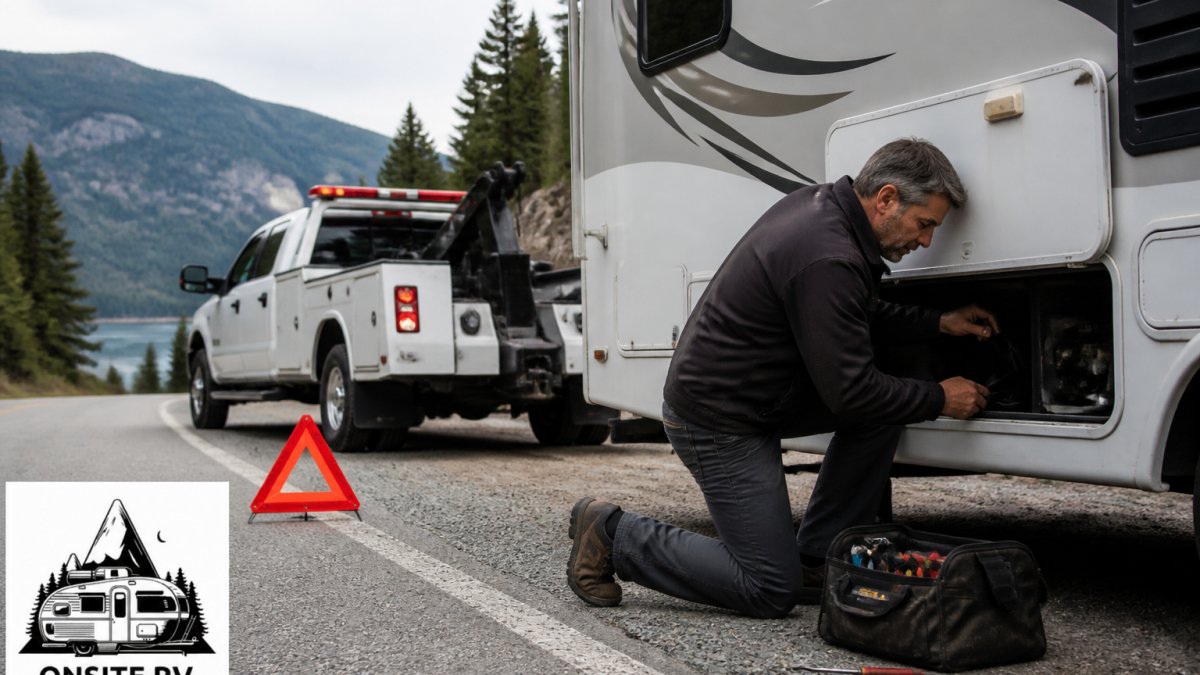
Call the rental company or roadside assistance first. They will arrange a tow truck that can handle the RV's size and weight. RV towing is different from car towing because RVs are heavier and need special equipment.
Who pays for towing costs. The rental company pays for towing if the breakdown is a mechanical failure. If the breakdown was caused by renter damage, your deductible applies. Check your rental agreement to see your deductible amount.
The tow truck will take the RV to the nearest authorized repair facility. The rental company chooses the facility, not you. Ask the tow operator where they are taking the RV and get the facility's contact information.
Documenting Damage and the Breakdown Event
Documentation protects you and helps the rental company process claims quickly. Take action immediately after the breakdown.
What photos and notes to collect. Photograph everything:
- The RV's position on the road
- Hazard lights and warning signs
- Any visible damage to the exterior
- The odometer reading and fuel gauge
- The surrounding area and weather conditions
- Any debris or objects involved in the breakdown
Write down in detail:
- The exact date and time of the breakdown
- Your location (address, highway, mile marker)
- What you were doing when it happened (driving, parked, starting up)
- What you heard, felt, or noticed before the breakdown
- Any warning lights or gauges that showed problems
- The names and contact information of any witnesses
- The names and badge numbers of police or emergency responders
Keeping records for insurance and claims. Save all photos and notes in one place. Also keep:
- Your rental agreement
- The emergency contact information
- The roadside assistance report
- Repair invoices and receipts
- Text messages or emails with the rental company
- Your credit card statement showing the rental charge
Send copies of all documentation to the rental company within 48 hours. Keep copies for yourself. This documentation is crucial if there is a dispute about who pays for repairs.
Insurance Coverage and Who Pays for Repairs
Insurance determines who pays when a rental RV breaks down. Understanding your coverage prevents surprise bills.
Rental company insurance versus personal coverage. The rental company carries insurance that covers mechanical failures. This is their responsibility as the RV owner. You do not need to pay anything for mechanical failures unless you caused damage.
Your personal auto insurance may also cover rental vehicles, but only for damage you caused. Check your policy before renting. Some personal policies exclude rental RVs entirely.
Most rental companies offer optional damage waiver insurance. This reduces your deductible if you cause damage. It costs extra but can save money if something goes wrong.
Deductibles and your financial responsibility. A deductible is the amount you pay toward a claim before insurance covers the rest. Rental agreements typically have deductibles ranging from $500 to $2,500. If you cause damage, you pay the deductible. The rental company's insurance pays the rest.
Some rental agreements make you responsible for the full cost of damage if you decline the damage waiver. Read your agreement carefully to understand your deductible and what it covers.
What Happens If Your Rental RV Cannot Be Repaired During Your Trip
Sometimes repairs take longer than your rental period. The rental company must provide solutions.
Replacement vehicle options. If your RV cannot be fixed during your trip, the rental company should offer:
- A replacement RV of the same or similar size
- A refund for the remaining rental days
- Help arranging alternative accommodation
The rental company wants you to continue your trip safely. They will work with you to find a solution. Ask about replacement options immediately when you learn repairs will take time.
Trip interruption coverage and refunds. Trip interruption coverage reimburses you for costs caused by the breakdown. This includes:
- Hotel accommodation while the RV is repaired
- Meals and transportation
- Activities or attractions you missed
- Partial refund of unused rental days
Check your rental agreement to see if trip interruption coverage is included. Some rental companies include it automatically. Others charge extra for this protection.
If your trip is cancelled because the RV cannot be fixed, the rental company should refund your rental fees minus a reasonable cancellation fee. Document all expenses related to the breakdown. Submit receipts and invoices to the rental company for reimbursement.
Preventing Breakdowns: Pre-Trip Inspection Checklist
The best way to handle a breakdown is to prevent one. Inspect your rental RV before you leave.
Before you pick up the RV, walk around it completely. Check:
- All lights work (headlights, brake lights, turn signals, hazard lights)
- Tires are properly inflated and show no damage
- Mirrors are clean and adjusted
- Door locks work smoothly
- Windows and skylights open and close
- Exterior has no cracks or damage
- Propane tank is full or nearly full
- Water tank is clean and fills properly
- Toilet and shower work
- Stove and oven ignite
- Refrigerator cools properly
- Furnace heats the space
- Air conditioning blows cold air
- All cabinets and drawers open and close
- Slide-outs extend and retract smoothly
- Engine starts and runs smoothly
- Transmission shifts properly
- Brakes feel firm and responsive
- Steering is smooth and responsive
- No warning lights appear on the dashboard
Take photos of the RV's condition before you leave the rental facility. Point out any damage to the rental company and ask them to document it. This protects you from being charged for pre-existing damage when you return.
During your trip, check the RV daily:
- Top up water and fuel as needed
- Empty waste tanks before they are full
- Listen for unusual noises while driving
- Watch for warning lights on the dashboard
- Check tire pressure and condition daily
- Monitor battery voltage if the RV has a display
Breakdowns happen, even with the best preparation. Knowing what to do keeps you safe and gets you back on the road faster. Call the rental company first, follow their guidance, document everything, and let the professionals handle repairs. If you need help with rental RV maintenance or repairs before your trip, contact ONSITE RV RENTAL AND REPAIR. Our team offers comprehensive pre-trip inspections and emergency repairs to keep your rental RV safe and reliable. Call us to book an appointment and travel with confidence.
Frequently Asked Questions
Who should I call first if a rental RV breaks down?
Contact the rental company or owner immediately using the emergency number in your rental agreement. They can advise whether the breakdown qualifies for roadside assistance coverage, authorize repairs, and arrange a replacement vehicle if needed. Do not arrange repairs or towing without approval unless you face an immediate safety threat. Platform messaging or direct contact details should be in your rental documents.
Who pays for repairs when a rental RV breaks down?
Responsibility depends on the cause. Mechanical failures (engine, transmission, appliances) are typically covered by the rental company's insurance. Renter-caused damage (collision, deliberate misuse, neglect) may fall on you, subject to your deductible and coverage limits. Review your rental agreement and insurance policy before your trip to understand your liability.
What should I document when a rental RV breaks down?
Take photos of the RV's exterior and interior, the breakdown location, and any visible damage. Record the date, time, and exact issue (warning lights, sounds, loss of function). Note weather conditions and road type. Keep receipts for any expenses you incur. Document all communication with the rental company, including names, times, and what was agreed. This documentation supports insurance claims and protects you if disputes arise later.
Should I arrange rental RV towing myself, or wait for the rental company?
Wait for the rental company to authorize and arrange towing unless you face an immediate safety hazard. Unauthorized towing can violate your rental agreement and leave you liable for costs. The rental company often has preferred tow services and coverage agreements. If you must act immediately for safety, document the situation, obtain the tow operator's name and company, and report it to the rental company as soon as possible.