 How-to
How to Find Qualified RV Technicians on Your Own Terms
Last Updated: October 30, 2026
Quick Summary
To find qualified RV technicians, check their certifications with the issuing body, confirm experience with your RV's make and model, and get a written estimate and workmanship guarantee before booking. Start with a small routine job to judge their communication and workmanship.
- Verify each certification directly with the issuing organization, not from a website logo.
- Ask how many units of your specific RV brand the technician has serviced this year.
- Require a written estimate that breaks out labour, parts and diagnostic fees.
- Get the workmanship guarantee in writing, including duration, scope and exclusions.
- Book a small routine service first to test communication and punctuality.
Table of Contents
- Why Finding a Qualified RV Technician Matters More Than Ever
- Know the Difference Between a Dealer, Independent Shop and Mobile Service
- RV Technician Certifications and How to Verify Them
- Matching a Technician to Your RV Brand and Repair Type
- Questions to Ask an RV Mechanic Before You Book
- How to Read an RV Repair Estimate and Compare Total Costs
- Using Mobile RV Repair Safely and Effectively
- Assessing Workmanship Guarantees, Warranty Work and Red Flags
- Booking Your First Appointment With a Qualified Technician
- Frequently Asked Questions
Why Finding a Qualified RV Technician Matters More Than Ever
Finding qualified RV technicians is harder than it looks. Your RV carries power, water, gas and mechanical systems in one rolling box, and a mistake in any of them can leave you stranded or unsafe. Owners often hire quickly, then learn the hard way that the work was not done right.
This guide shows you how to find qualified RV technicians on your own terms. You will learn where to look, how to check credentials, what to ask before booking, and how to judge an estimate. Keep reading for a checklist you can use today.
Qualified does not mean "has a truck." It means the person has the training, the experience with your type of RV, and a clear way to stand behind the work. Many owners skip these checks and end up paying twice.
Know the Difference Between a Dealer, Independent Shop and Mobile Service
Each type of service fits a different job. Choosing the right one saves time and money before you even pick a name.
- Dealer service departments know one brand well. They are a good choice for warranty repairs and recall work.
- Independent shops often cover many brands and can handle older or unusual models.
- Mobile technicians come to your site. They suit routine maintenance and simple fixes when moving the RV is hard.
RV Technician Certifications and How to Verify Them
Certifications show that a technician has studied the systems they work on. They are not the only proof of skill, but they are a useful starting point.
Ask which certifications the technician holds and in which systems. Then verify them yourself. Do not rely on a logo on a website.
A Credential-Verification Checklist
- Ask for the certificate name, issuing body and date
- Confirm the certificate with the issuing organization directly
- Check that the certificate covers your system, such as propane, electrical or chassis
- Ask whether the license or certificate is current, not expired
- Request two references from owners with a similar RV
Matching a Technician to Your RV Brand and Repair Type
A technician who fixes travel trailers well may struggle with a Class A motorhome. Match the person to your make, model and repair type.
Start by asking, "How many [your brand] units have you serviced this year?" A clear, specific answer is a good sign. A vague answer is a warning.
For safety-critical work, such as propane leaks, gas appliances or brake systems, choose someone with documented specialty training. Do not let a general handyman work on these systems.
Questions to Ask an RV Mechanic Before You Book
Use these questions on the phone or by email. Good technicians answer them plainly. For more on vetting technicians and preparing your site, see how to hire professional RV setup services.
- What is your experience with my RV make and model?
- Which certifications do you hold, and which systems do they cover?
- Will you give me a written estimate before starting?
- What happens if you find another problem during the repair?
- Do you carry liability insurance and workers' compensation?
- Do you need parts, and how long will sourcing take?
- What is your warranty on labour and parts?
Pay attention to tone. A technician who explains the work in simple terms is more likely to do careful work.
The seven questions below are the ones good technicians answer plainly, so use them on the phone or by email before you commit.
| Question | What it checks | Good sign |
|---|---|---|
| What is your experience with my RV make and model? | Brand-specific skill | Specific, recent examples |
| Which certifications do you hold, and which systems do they cover? | Verified training | Named certificates and systems |
| Will you give me a written estimate before starting? | Cost transparency | Yes, in writing |
| What happens if you find another problem during the repair? | Approval process | Approval needed before extra work |
| Do you carry liability insurance and workers' compensation? | Financial protection | Yes to both |
| Do you need parts, and how long will sourcing take? | Timing | Clear sourcing timeline |
| What is your warranty on labour and parts? | Accountability | Stated in writing |
How to Read an RV Repair Estimate and Compare Total Costs
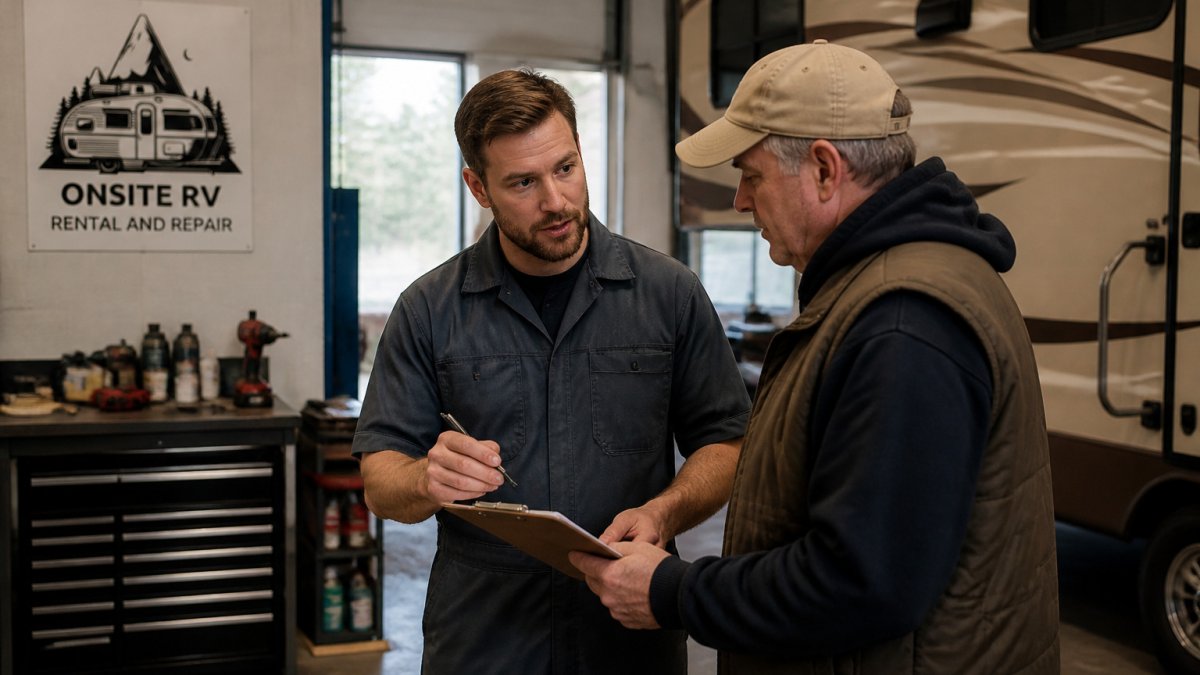
An estimate is not a single number, it is a breakdown you can audit. Most RV repair bills combine four cost streams: labour, parts, diagnostic or call-out fees, and shop supplies or environmental charges. Comparing only the hourly rate is the most common mistake owners make, because a low rate paired with padded hours or marked-up parts often costs more than a higher rate with a tight scope. To see what professional inspections typically include and cost, read our guide to professional RV inspection services.
The Four Cost Streams in a Written Estimate
- Labour: quoted as hours × hourly rate. Ask whether the rate is the same for all work or higher for specialty systems (electrical, propane, chassis).
- Parts: each part should be listed with a part number and price. Ask whether the shop marks up parts and by what percentage.
- Diagnostic or call-out fees: many shops charge a flat diagnostic fee that may or may not be credited toward the repair if you approve the work. Some mobile technicians add a travel or call-out fee based on distance.
- Shop supplies and environmental fees: small line items for consumables, disposal, and shop materials. These should be disclosed, not buried.
How to Compare Two Estimates Side by Side
Build a simple comparison sheet with one column per estimate and one row per cost stream. Then add three rows competitors rarely mention:
- Scope of work: does each estimate cover the same repair, or is one quoting a partial fix? A cheaper estimate that addresses only the symptom is not comparable.
- Parts quality: OEM vs. aftermarket vs. refurbished. Ask for the part brand and warranty on each.
- Contingency language: what happens if the technician finds a second problem mid-repair? A good estimate states the approval threshold, for example, "any additional work over $150 requires your approval before proceeding."
Red Flags in an Estimate
- A single lump-sum number with no labour or parts breakdown
- No mention of diagnostic fees or travel charges
- Refusal to put the estimate in writing
- An estimate that expires in less than 24 hours, pressuring you to approve on the spot
- Parts listed without part numbers or brands
If an estimate is missing any of these details, ask for a revised version before you book. A shop that cannot produce a clear written estimate is unlikely to produce a clear invoice.
Using Mobile RV Repair Safely and Effectively
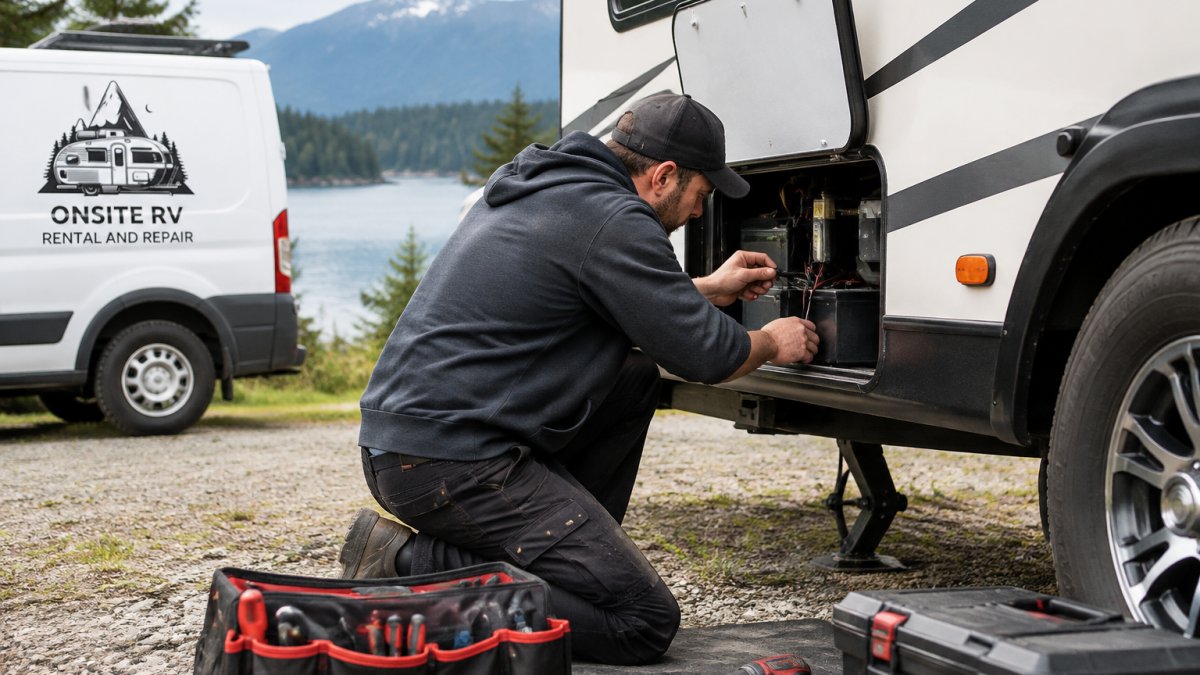
Mobile service is convenient, but it works best with some preparation. If you need urgent help on the road, our emergency RV repair guide for Vancouver Island explains what to do first and how to get service quickly. Make sure the site is level, safe and accessible. Clear the area around the RV so the technician can work.
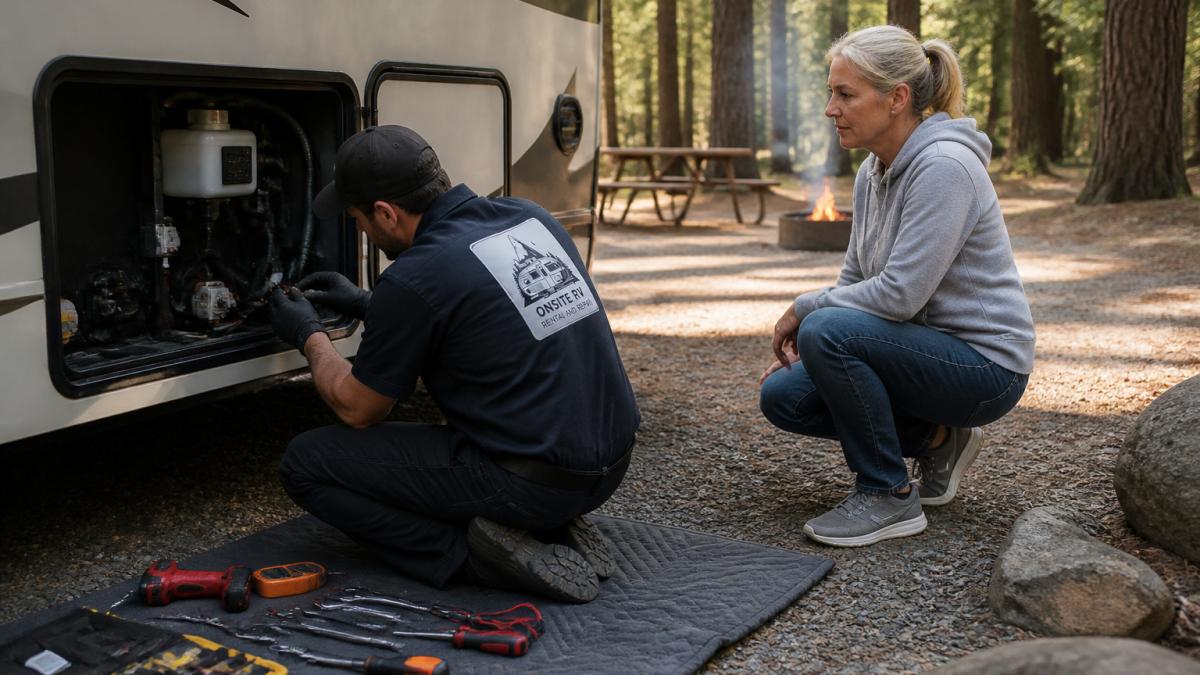
Plan for these points:
- Confirm the service area and arrival window in advance
- Ask what tools and parts the technician brings
- Ask how they handle gas and electrical work on site
- Keep a record of the work done and the parts replaced
A common mistake is assuming a mobile tech carries every part. Ask about parts availability before the appointment, so you do not wait days for one component.
Assessing Workmanship Guarantees, Warranty Work and Red Flags
A workmanship guarantee is only as good as its written terms. Before you approve any repair, ask for the guarantee in writing and read it for four things: duration, scope, exclusions, and the remedy if the repair fails.
What a Written Workmanship Guarantee Should State
- Duration: how long the guarantee lasts, commonly 30 to 90 days on labour, though some shops offer longer on specific systems. Ask whether the clock starts on the invoice date or the pickup date.
- Scope: which work is covered. A guarantee that covers "the repair" is vague; a strong one names the system and the specific parts replaced.
- Exclusions: what voids the guarantee. Common exclusions include damage from further use, unrelated failures, or work performed by another shop after the original repair.
- Remedy: what the shop will do if the repair fails, redo the work at no charge, refund labour, or cover parts? Get this in writing, not as a verbal promise.
How Warranty Work Interacts With Your Repair
If your RV is still under a manufacturer's warranty, confirm before booking whether the shop is authorized to perform warranty repairs for your brand. An unauthorized shop may do the work correctly but leave you paying out of pocket because the manufacturer will not reimburse a non-authorized facility. Ask: "Are you an authorized service center for my RV's manufacturer, and will you bill the warranty directly or will I pay and seek reimbursement?" For a detailed list of what to verify and watch for, see our RV pre purchase inspection checklist.
For extended service contracts (often called RV service contracts), the process is different: the contract administrator typically requires pre-authorization and may dictate parts sourcing or labour rates. Ask the shop whether they have experience billing your specific contract provider, and get the claim number before work begins.
How to Assess Repair Quality After the Work Is Done
Use this post-repair check:
- Documentation: did you receive an itemized invoice listing every part and labour hour, plus any parts returned to you?
- Before-and-after evidence: for body, roof, or slide-out work, ask for photos of the failed component and the completed repair.
- Function test: operate every system the technician touched, propane appliances, slides, jacks, electrical outlets, before you leave the lot or before the mobile technician departs.
- Follow-up window: note the guarantee expiry date and do a second function test a week later, while the guarantee is still active.
Red Flags That Should Stop the Booking
- No written estimate or invoice
- Pressure to approve work on the spot
- Refusal to show certifications or proof of liability insurance
- Cash-only payment with no receipt
- Vague or verbal-only warranty terms
- No physical business address or registered business name on the invoice
If a dispute cannot be resolved directly, consumer protection legislation in your province or territory may apply to home-service or vehicle-repair transactions. Contact your provincial consumer affairs office for guidance before pursuing legal action.
Booking Your First Appointment With a Qualified Technician
Once you have a shortlist, book a small job first. A routine service or inspection shows you how the technician communicates, arrives on time and treats your RV.
To book with ONSITE RV RENTAL AND REPAIR, call 1.250.418.0073 or email mobile@onsiterv.info. You can also visit our contact page for our Port Alberni location and island-wide service details. We serve Port Alberni and travel across Vancouver Island, with year-round service and a shop for in-house repairs. Call to book an appointment today.
Frequently Asked Questions
How do I know if an RV technician is qualified?
Ask for proof of training and experience with your specific systems, such as RV-specific certifications, manufacturer training or documented years of work on plumbing, electrical, propane and chassis. Check that the technician can explain what they are doing in plain language and that the business has a physical address, insurance and a clear written estimate process. Ask for references from owners with similar rigs. A qualified technician will welcome these questions and answer them without hesitation, and will be specific about which repairs they handle and which they refer elsewhere.
What certifications should an RV technician have?
Look for recognized RV technician training, manufacturer-specific courses for the brands you own, and certifications in trades that apply to RV systems, such as gas-fitting or electrical credentials where they are required. Confirm that credentials are current and that they match the work you need, since a technician who handles appliances may not be qualified for chassis or propane repairs. Certificates are a starting point; practical experience with your make and model, plus customer references, tells you more about the quality of the work you will receive.
How do I find a mobile RV repair technician?
Search for mobile RV repair providers that list the areas they serve and their typical appointment availability, then confirm they can bring the parts and tools your repair usually needs. Ask whether they can carry common parts on the first visit or whether a second trip would be needed, since that affects both wait time and total cost. Compare several providers on service area, response time, written estimates and reviews from owners who had service at their own site.
What should I provide when requesting an RV repair estimate?
Provide the year, make and model, the number of slides or systems involved, a clear description of the symptoms, when they started, and any previous repairs. Photos or a short video of the problem help a technician estimate scope more accurately. Ask whether the estimate covers diagnosis, labour and parts, and whether there is a diagnostic fee that is credited if you proceed. The more detail you give at the start, the fewer surprises you will face when the final invoice arrives.