 how-to
Mobile RV Repair Vancouver Island: How to Get Fixed Fast
Table of Contents
- How Mobile RV Repair Works on Vancouver Island
- Step 1: Troubleshoot the Problem Before You Call
- Step 2: Book the RV Repair Service Call
- Step 3: Verify RV Technician Qualifications
- What Mobile RV Repair Cost Covers
- Service Area: Where Mobile RV Repair Reaches on the Island
- Step 4: Prepare Your RV for the Technician's Arrival
- Step 5: Keep the Repair Done With Seasonal Maintenance
- Frequently Asked Questions
Last Updated: October 21, 2026
How Mobile RV Repair Works on Vancouver Island
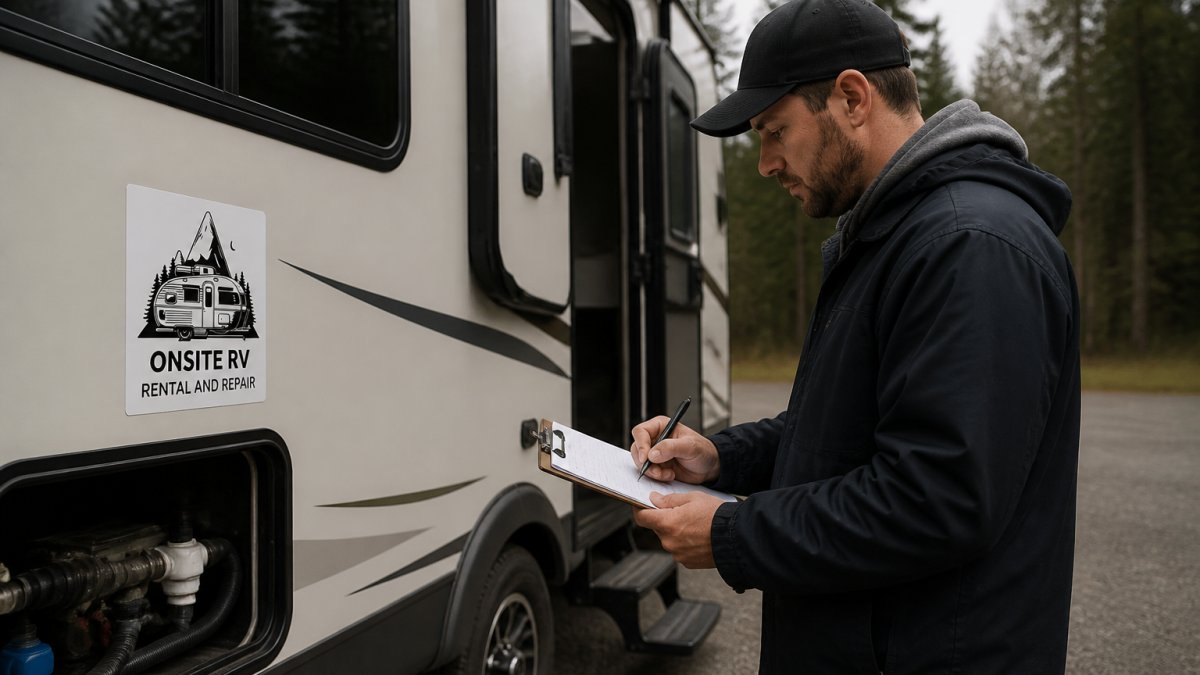
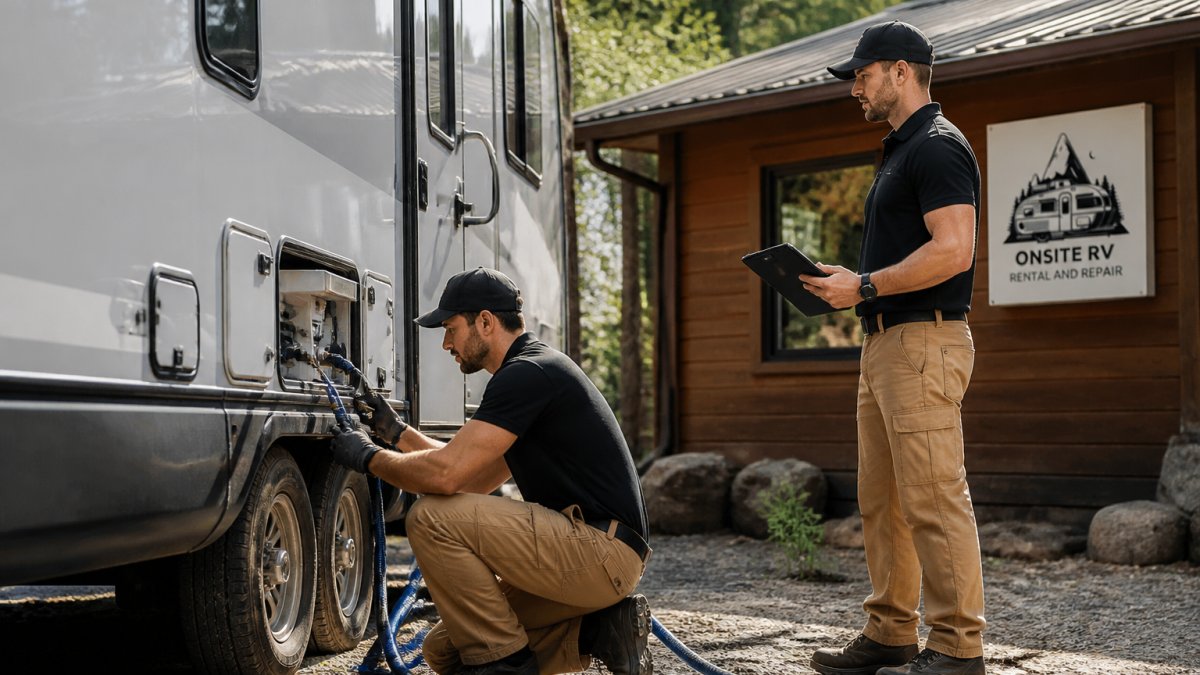
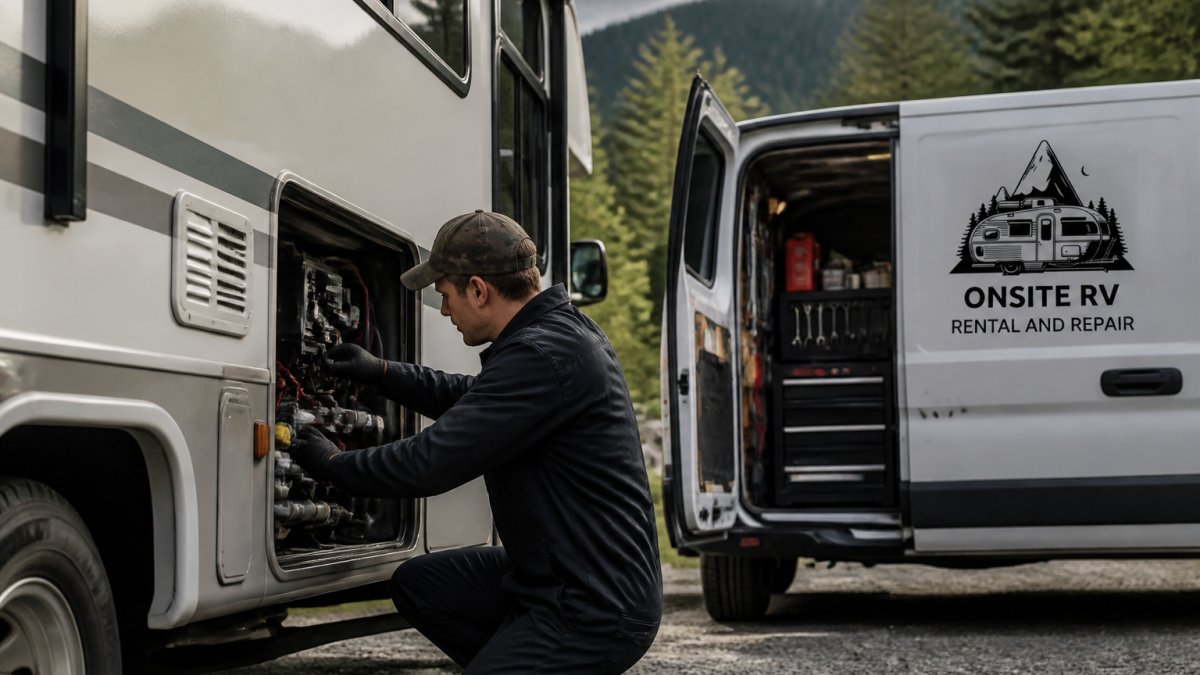
Mobile RV repair brings a certified technician to your campsite, driveway, or roadside pullout instead of you hauling a broken rig to a shop. This guide from ONSITE RV RENTAL AND REPAIR covers how mobile RV repair on Vancouver Island works and how to prepare so the visit fixes the problem the first time.
Here's the part most owners learn the hard way: the technician's van only carries so much. Diagnostics, wiring, fittings, and common parts travel well. A cracked holding tank or a failed fridge cooling unit usually doesn't. Knowing that distinction before you call saves you a wasted service call.
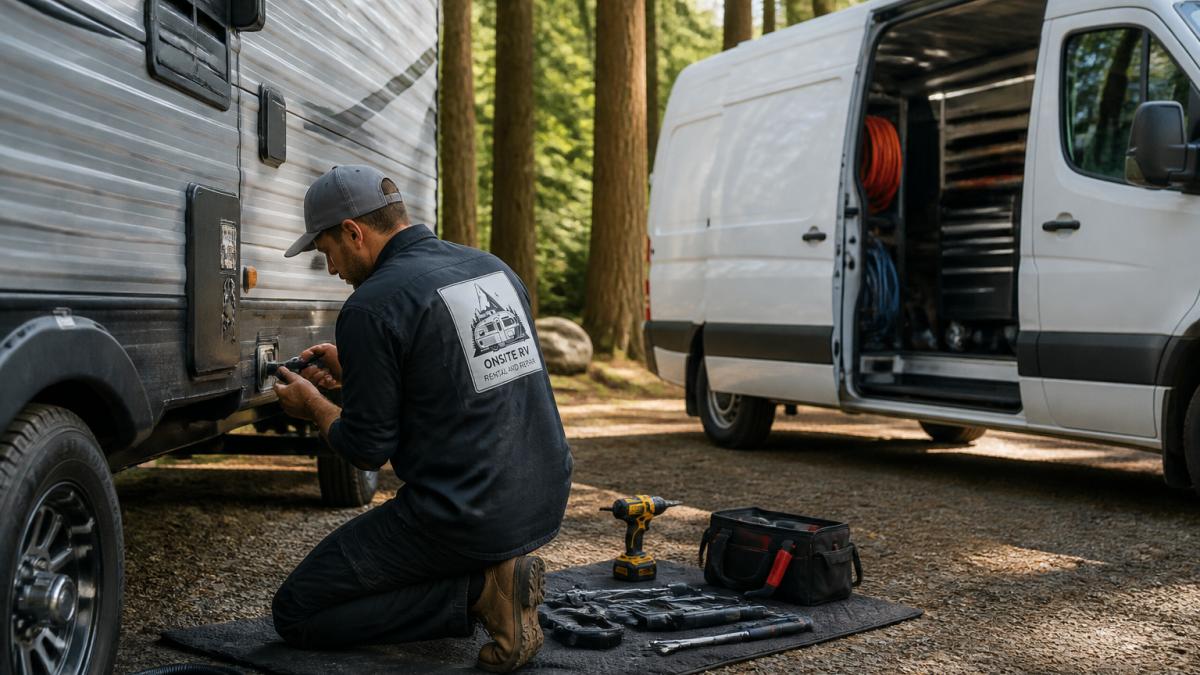
What On-Site Service Covers
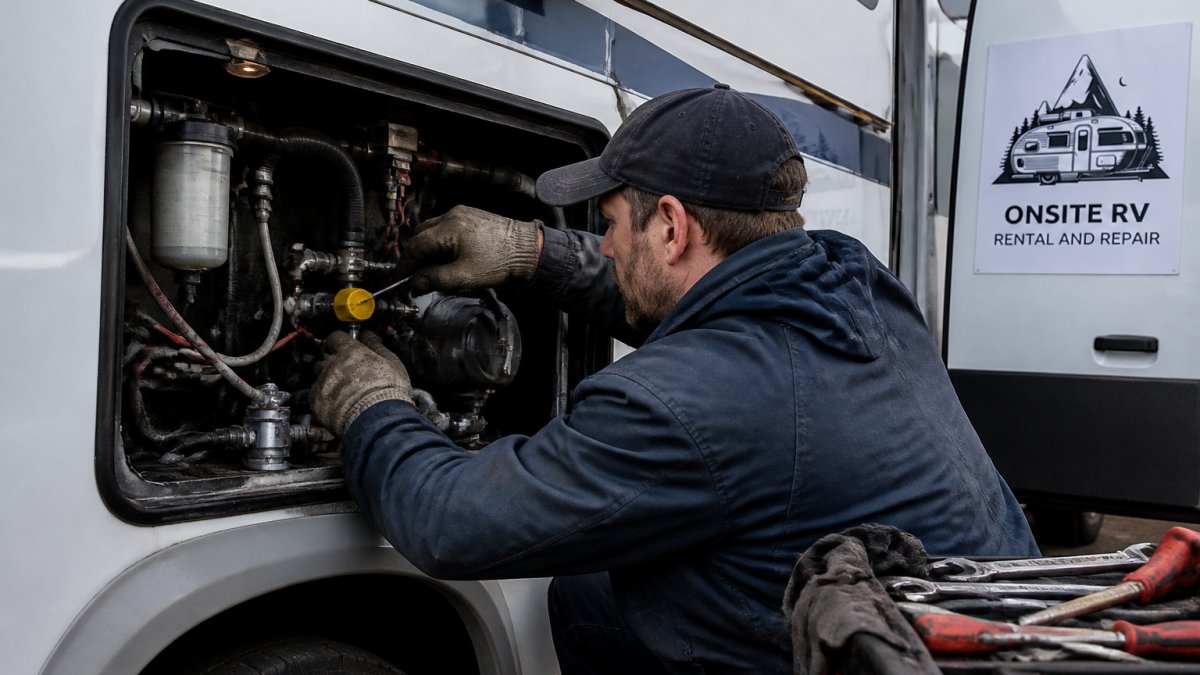
On-site mobile RV repair covers diagnosis and repair of systems that can be serviced where the RV sits. That includes 12-volt and 120-volt electrical faults, wiring and lighting, battery and converter issues, plumbing and water system leaks, propane system checks and appliance service, furnace and water heater repairs, plus chassis items like brakes and bearings when the technician has the right equipment aboard.
An RV technician arriving on-site typically starts with a full systems inspection, then works through the fault with meters, manometers, and pressure testers. Most jobs finish in a single visit. Jobs needing a lift, a body panel, or a part the van doesn't stock get scheduled for the shop in Port Alberni.
When Mobile Repair Is the Wrong Choice
Mobile repair is the wrong choice when the rig isn't safe to occupy or the job needs fixed equipment. Collision damage, frame and body repair, axle replacement, and anything requiring a hoist belong in a shop. So does a repair that depends on a part nobody carries on a van.
Be honest with the dispatcher about what you're seeing. A technician who arrives expecting a dead battery and finds a burned-out converter has the wrong parts and a wasted trip. A two-minute phone description prevents that.
Step 1: Troubleshoot the Problem Before You Call
Troubleshooting before you call narrows the fault and shortens the visit. A technician who knows which circuit, appliance, or system is failing arrives with the right parts and finishes faster. It also tells you whether the problem is something you can solve yourself in five minutes.
Work through this checklist before dialing:
- Check the battery voltage at the terminals with a multimeter (12.6V or higher on a rested lead-acid battery)
- Confirm the breaker and fuse panel has no tripped or blown circuits
- Test the shore power pedestal with another appliance or a plug tester
- Note whether the fault appears on battery power, shore power, or both
- Check the propane tank level and confirm the valve is open
- Look for water pooling near the pump, water heater, and fittings
- Write down the appliance model numbers and the exact symptoms
RV Appliance Troubleshooting: What You Can Check Yourself
RV appliance troubleshooting starts with the simple stuff: power, fuel, and airflow. A fridge that won't cool on propane but works on electric points to the burner or gas valve, not the cooling unit. A furnace that clicks but doesn't light usually means low gas pressure or a dirty burner.
What most guides miss is the reset. Many RV fridges, water heaters, and furnaces have a reset button or a sequence that clears a lockout. Cycling the appliance off at the breaker for a minute and back on resolves a surprising number of no-start calls.
Step 2: Book the RV Repair Service Call
Booking an RV repair service call works best when you give the dispatcher four things: your location, the RV type and year, the symptoms, and your availability. Mobile providers on the island offer flexible availability, so same-week appointments are realistic for most non-emergency work.
Emergency and roadside repair gets prioritized. If your rig is stranded on a highway shoulder or a slide is jammed open, say so at the start of the call. That changes how the job is scheduled.
Expect a service call structure: a scheduled window, a travel fee that reflects distance from the shop, and a repair estimate before work begins. Ask for the estimate in writing.
Step 3: Verify RV Technician Qualifications
RV technician qualifications are the single best predictor of whether the repair holds. Ask what certification the technician holds and whether the shop can show it. Red Seal certification in a relevant trade is a strong signal, and factory-trained status on major appliance and chassis brands tells you the technician has been taught the specific systems in your rig.
Then ask two more questions. Does the shop carry liability insurance, and will the technician walk you through the diagnosis before starting work? A certified technician explains what failed and why. A parts-swapper guesses.
What Mobile RV Repair Cost Covers
Mobile RV repair cost breaks into four parts: the service call fee, travel to your location, labor, and parts. Most providers quote these separately, which makes it hard to compare one shop against another unless you know what each line actually covers. Here is how the pieces usually work, and the questions that surface the real number before anyone drives out.
Service call fee. This is the flat charge for showing up and performing the initial diagnosis, whether or not a repair follows. Ask whether the diagnostic fee is credited against the repair if you approve the work, some shops apply it, some don't, and that difference can be the cost of a tank of fuel.
Travel. Travel is normally billed by distance or drive time from the shop, and it is the line most likely to surprise you. A call inside the core radius may carry a modest flat travel charge; a call an hour or more out is often billed at a per-kilometer rate or a block of time. Ask for the travel charge in writing before you book, and ask whether it is charged one way or round trip.
Labor. Labor is billed hourly or by the job. Hourly rates vary with the technician's certification and the complexity of the system, and a job quoted flat is only as good as the diagnosis behind it. Ask what the hourly rate is, what the minimum billed time is, and whether after-hours or weekend calls carry a premium.
Parts. Parts are billed at the shop's price plus, in many cases, a markup. The variable that matters most is availability: a part the van stocks is a same-visit fix, while a part that has to be ordered adds a second visit and often a second travel charge. Confirm before the technician leaves the shop whether the likely part is on the van.
Two costs catch owners off guard. The first is a second visit when a part has to be ordered. The second is diagnostic time on an intermittent fault that won't reproduce on demand. Both are legitimate, and both are avoidable with a clear description up front.
At ONSITE RV RENTAL AND REPAIR, we quote the call-out and labor before we travel, and we confirm parts availability before the technician leaves the shop. Call to book an appointment and get a straight answer on cost.
Service Area: Where Mobile RV Repair Reaches on the Island
Mobile RV repair reaches most of Vancouver Island, but "most" is doing a lot of work in that sentence. Travel boundaries are set by drive time from the shop, and the practical coverage map looks different depending on whether your rig sits in a driveway, a full-service campground, or a remote pullout at the end of a logging road.
The core service area runs from the Cowichan Valley and Nanaimo north through Parksville and Qualicum Beach to Port Alberni, and south through Ladysmith to Victoria and Sidney. These communities sit inside the usual radius, where same-week and often same-day scheduling is realistic and the travel charge is at its lowest.
Communities further out, the Comox Valley, Campbell River, the Oceanside and west coast communities, and the northern and western reaches of the island, are served with a travel fee that reflects the distance. The fee is not a penalty; it is the honest cost of a technician's day. A job two hours out consumes most of a working day, which affects scheduling and the availability of same-day slots. That is why the dispatcher asks for your exact location, including the campground name and site number, before quoting travel.
Ferry-accessed and remote locations need a separate conversation. A rig on an island reached by ferry, or at a site well off the paved network, may still be serviceable, but the booking has to account for ferry time, sailing schedules, and the possibility that the technician's van cannot reach the site. Call and describe the access, road surface, gate codes, whether a service vehicle can park within reach of the rig, and the dispatcher can tell you whether a mobile visit makes sense or whether the job is better handled at the shop in Port Alberni.
If you're outside the usual radius, call anyway. Some jobs are worth the drive, and some are better handled at the shop. The point of the service-area conversation is to get an honest answer about which one applies to you before anyone fuels up.
Step 4: Prepare Your RV for the Technician's Arrival
Preparing your RV for the technician turns a two-hour visit into a ninety-minute one. Clear access to the systems being serviced, move personal items out of the way, and have the rig level and powered as it normally is.
Do these five things before the technician arrives:
- Clear storage bays that block access to the converter, water pump, or furnace
- Note which campground rules apply to service vehicles and visitor parking
- Have your appliance model numbers and any prior repair receipts ready
- Confirm the propane is on and the battery is charged, so systems can be tested live
- Be present for the first ten minutes so you can describe the symptoms firsthand
A common mistake is leaving the rig winterized or the water system drained when the call is about plumbing. The technician needs the system pressurized to find a leak.
Step 5: Keep the Repair Done With Seasonal Maintenance
Seasonal maintenance is what keeps a repaired system repaired. Island conditions are hard on RVs: wet winters drive moisture into seals and compartments, and coastal humidity corrodes connections faster than dry interior climates do.
A preventive maintenance schedule that fits island conditions looks like this:
| Season | Focus | Why It Matters Here |
|---|---|---|
| Spring | Roof and seal inspection, water system pressure test | Winter moisture finds every failed seal |
| Summer | Propane system check, appliance service, brake and bearing inspection | Peak travel season, highest system load |
| Fall | Winterization, battery service, compartment sealing | Wet season starts before most owners expect |
| Winter | Stored-unit checks, humidity control, battery maintenance | Condensation damages stored RVs |
Owners of permanently stationed RVs need the same schedule, minus the chassis items. A pre-purchase inspection before you buy a used rig follows the same logic in reverse: check the systems before they become your repair bill.
That's the argument for keeping your RV rather than selling it when maintenance feels heavy. A maintained rig is a known quantity. A neglected one is a series of surprises. Our team handles routine maintenance, diagnostics, and repairs year-round, and we'll walk you through what we find so you understand your own systems.
Frequently Asked Questions
How do I find a qualified RV technician for appliance repairs?
Ask three things before booking: what certification the technician holds (Red Seal or factory training), and whether they carry parts for your appliance brand. A qualified mobile RV repair technician should be able to explain their diagnostic process over the phone, not just quote a price. Request a written repair estimate before work starts, and confirm the visit includes a service call fee separate from parts and labor.
What information should I provide when booking mobile RV repair?
Give the dispatcher your RV make, model, and year, the exact symptom (for example, fridge runs on propane but not shore power), what you have already checked, and your location with clear access details. Mention whether the rig is at a campsite, driveway, or storage lot and whether power and water are available on site. This helps the technician load the right parts and arrive prepared, which shortens the RV repair service call and reduces the chance of a second visit.
How much does mobile RV repair cost?
Mobile RV repair cost depends on the system involved, parts required, travel distance, and whether the job is an emergency call-out. Most providers charge a service call or travel fee plus hourly labor and parts. Pricing varies by provider and location on the island, so ask for the call-out fee and hourly rate up front, and request a written estimate before work begins. Confirm whether travel beyond a set radius adds a surcharge.
Can a mobile RV technician repair appliances at my campsite or home?
Yes. Most appliance faults, including fridge, furnace, water heater, stove, and air conditioner issues, can be diagnosed and repaired on site. The technician brings diagnostic tools and common parts, though a failed control board or specialty component may need ordering. If the repair requires a shop bay, such as certain chassis or body work, a good mobile RV repair provider will tell you during the service call rather than after arrival.
Maintenance only feels overwhelming when it's reactive. A seasonal schedule and a technician you trust turn it into a predictable line item. ONSITE RV RENTAL AND REPAIR provides mobile service across the island, a shop in Port Alberni for jobs that need fixed equipment, and diagnostics that come with an explanation rather than just an invoice. Call to book an appointment and get your rig ready for the next season.